Discover the Best Snowshoeing Trails in Breckenridge
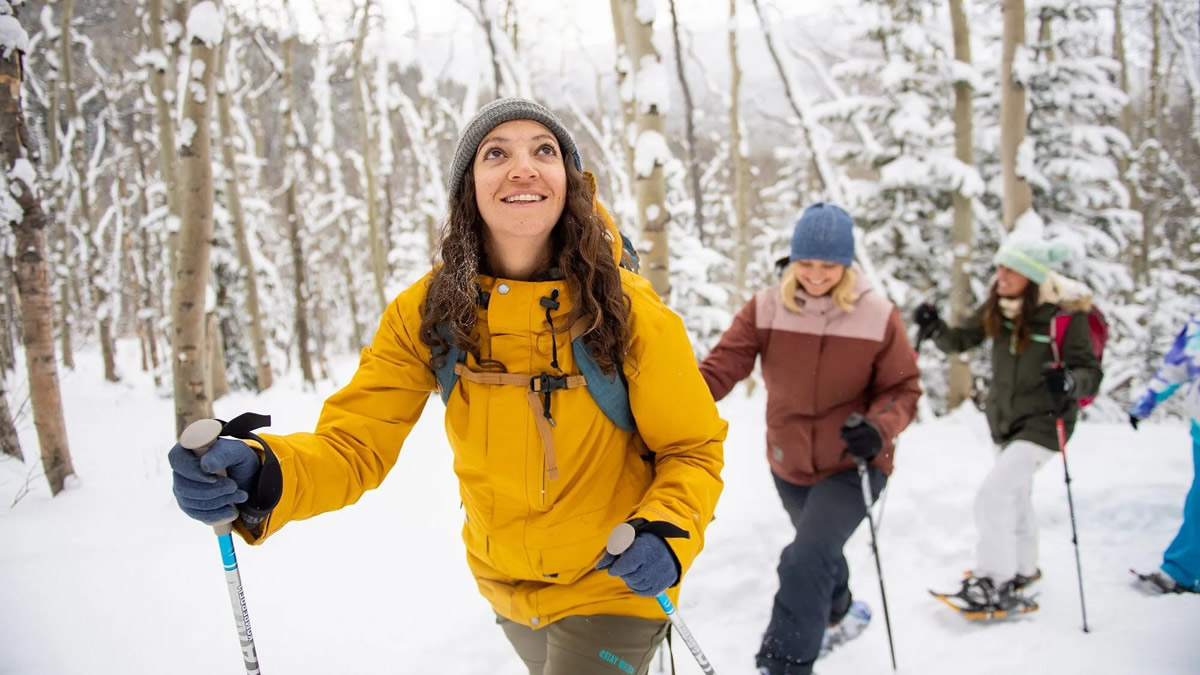
There is something wonderfully different about experiencing Breckenridge in winter on foot. When most people picture the town during ski season, they imagine chairlifts climbing above the Tenmile Range, skiers moving through fresh snow and the historic streets of downtown filled with visitors coming off the mountain. But there is another side of Breckenridge that becomes apparent when you leave the ski slopes behind and put on a pair of snowshoes.
The pace changes immediately.
Instead of concentrating on the next run or waiting for a lift, you begin noticing the smaller details of winter: snow accumulating on the branches of spruce trees, the sound of a creek moving beneath the ice, the enormous silence of the forest and the way the mountains appear through the trees. Snowshoeing in Breckenridge offers a much quieter way to experience the Colorado Rockies, and it can be surprisingly accessible even if you have never tried it before.
The town and surrounding area offer winter trails ranging from relatively gentle outings to longer routes that require considerably more endurance and preparation. There are also Nordic centers where visitors can rent equipment, purchase trail passes and receive guidance before heading into the snow. For travelers planning a winter vacation in Breckenridge, snowshoeing can therefore be much more than an alternative activity for a day when you do not want to ski. It is an entirely different way of understanding the landscape.
Why Snowshoeing Is Such a Great Way to Experience Breckenridge
One of the great advantages of snowshoeing is that you do not need years of experience to begin.
Modern snowshoes are considerably easier to use than the traditional equipment many people associate with the sport. At the Breckenridge Nordic Center, for example, the staff describes snowshoeing as an activity that can be learned very quickly, and the center offers equipment for different ages and ability levels. Its trail network includes more than 18 miles of snowshoe-specific trails across approximately 1,400 acres of winter terrain.
That accessibility makes snowshoeing particularly appealing to families, couples and travelers who want to spend time outdoors without committing to a full day of skiing.There is also a different rhythm to the activity. Skiing is naturally focused on movement and descent, while snowshoeing encourages you to look around. You walk through the forest rather than race through it. You have time to stop for photographs, watch wildlife from a distance and appreciate the changing scenery.
And because Breckenridge sits at high elevation, even a relatively modest winter walk can feel like a genuine Rocky Mountain adventure.
Breckenridge Nordic Center: One of the Best Places to Start
For first-time visitors, the Breckenridge Nordic Center is one of the easiest places to begin exploring the area’s snowshoe trails.
Located at 9 Grandview Drive, the Nordic Center has a dedicated network of snowshoe trails separate from its groomed cross-country ski trails. The routes range from short beginner loops to longer outings, and the trails are mapped and marked so visitors can choose an experience appropriate for their ability. This distinction is important. Snowshoeing is not simply a matter of walking wherever the snow looks inviting. The Nordic Center’s trail system uses designated snowshoe routes, and trail passes are required. Snowshoers are asked to remain on the marked snowshoe trails rather than walking on the groomed ski tracks. The center is also convenient because you can arrange much of the experience in one place. Snowshoes and poles are available for rent, and winter boots can be provided to people renting snowshoes. After your outing, you can return to the lodge, warm up and enjoy food or a drink rather than immediately having to leave the mountain environment.
For someone who has never snowshoed before, that combination of equipment, marked trails and on-site assistance removes much of the uncertainty that can come with trying a winter trail independently.
Boreas Pass: Big Mountain Views Without the Ski Resort Crowds
If there is one winter route that deserves special attention, it is Boreas Pass Road.The road has a fascinating history. Boreas Pass was once an important transportation route through the mountains and later became part of the railroad system that connected the mining communities of Colorado. During winter, the road is closed to motorized traffic and becomes a recreational route for activities including snowshoeing and Nordic skiing.
That history is only part of the appeal.
The real attraction is the landscape. From the Breckenridge side, the route gradually climbs through a mountain environment with expansive views toward the surrounding ranges and back toward Breckenridge. Visit Breck specifically recommends Boreas Pass as a winter snowshoeing destination because of its broad views and relatively straightforward terrain. The important word here is gradual. Boreas Pass is not necessarily difficult because of technical terrain, but the elevation and length can make a winter outing considerably more demanding than the same walk might appear on a map.
If you are planning to go farther toward the Continental Divide, conditions can change dramatically. The Summit Huts Association notes that strong winds and whiteout conditions are possible in the higher Boreas Pass area, and recommends appropriate navigation equipment for adverse weather.
For casual visitors, there is no need to turn the outing into an expedition. One of the pleasures of Boreas Pass is that you can enjoy the scenery without feeling obligated to complete the entire route.
Burro Trail and the Quieter Side of Breckenridge
Travelers looking for a more relaxed winter experience should also consider the Burro Trail.
Visit Breck includes Burro Trail among its recommended snowshoeing locations and describes it as a family-friendly route with relatively little elevation gain. The trail moves through the forest and follows the character of the mountain landscape rather than demanding a strenuous climb.
This is the type of trail that illustrates why snowshoeing can work so well for families.
You do not necessarily need a dramatic summit or a long backcountry route to have a memorable day. Sometimes the best winter outing is simply a quiet trail through the trees, particularly when children are involved and the objective is to enjoy being outside rather than covering as many miles as possible. As always, winter conditions matter. A trail that feels easy after several days of packed snow can behave very differently immediately after a storm.
Iowa Hill: Where Breckenridge’s Mining History Meets Winter
One of the things that makes Breckenridge different from many mountain destinations is that its history is still visible throughout the landscape.
Iowa Hill is a good example.
The trail is associated with Breckenridge’s mining history, and guided winter experiences in the area can incorporate historical interpretation. Breckenridge’s official tourism organization notes that Breckenridge History offers guided snowshoe experiences that include access to the Bunk House on Iowa Hill and the French Gulch area. Current COTREX information lists the Iowa Hill Trail at approximately 1.2 miles, with an elevation range of about 9,447 to 9,829 feet. The trail allows hiking and leashed dogs under the listed regulations. What makes this route particularly interesting is the combination of landscape and history. You are not simply walking through a forest covered in snow; you are moving through an area shaped by the mining era that helped create Breckenridge.
For visitors interested in Colorado history, that context can make a relatively short outing considerably more meaningful.
French Gulch: Forest, Snow and Breckenridge’s Mining Past
French Gulch offers another opportunity to combine winter scenery with the history of the region.
The route follows a gated public road and trail system extending into the mountains east of Breckenridge. The Colorado Mountain Club identifies French Gulch as suitable for winter travel and snowshoeing, with access toward historic mining areas including the Sallie Barber Mine and Sister’s Cabin.
This is a good example of why I would avoid thinking about Breckenridge snowshoeing purely in terms of “the five best trails.”
The better question is: What kind of winter experience are you looking for?
Do you want a short family outing?
A marked trail with rentals and warming facilities?
A historic landscape?
A longer route through the forest?
A place with panoramic mountain views?
Once you ask that question, Breckenridge becomes much easier to explore.
Snowshoeing With a Guide
If you are unfamiliar with winter mountain travel, a guided snowshoe tour can be one of the smartest ways to experience the area.Breckenridge offers guided Nordic and snowshoe experiences, and local guides can take care of navigation while explaining the surrounding landscape and history. Breckenridge’s tourism organization specifically promotes guided experiences for visitors who want to concentrate on the scenery rather than constantly worrying about finding their way. This can be especially valuable for visitors who are coming from lower elevations and are not accustomed to Colorado’s winter environment.A guide also understands that winter trails are not static. Snow depth, recent storms, wind, temperature and trail conditions can all change the character of a route.
That local knowledge is difficult to replace with a trail description written months earlier.
What Should You Wear for Snowshoeing in Breckenridge?
One of the most common mistakes beginners make is dressing as though they are going downhill skiing.Snowshoeing is active. You are continuously walking uphill, through snow, and generating considerably more heat than you might expect. The Breckenridge Nordic Center specifically recommends dressing lightly enough for hiking rather than wearing the heaviest downhill ski layers. Hats, gloves, sunglasses, sunscreen and appropriate winter footwear remain essential.
Layering is therefore much more practical than relying on one extremely heavy jacket.
A moisture-managing base layer, an insulating middle layer and a weather-resistant outer layer give you the flexibility to adjust as your body temperature changes.Your footwear is equally important. Waterproof winter boots or sturdy hiking boots are necessary, and traction matters. At the Nordic Center, winter boots are available for visitors who need them when renting snowshoes.
And do not underestimate the sun.
At Breckenridge’s elevation, winter sunlight reflecting from the snow can be intense even when the air feels extremely cold. Sunglasses and sunscreen are not summer-only accessories in Colorado.
Winter Weather Changes the Trail
A trail description is useful, but it should never replace checking conditions before leaving.Breckenridge’s winter environment can change quickly. Fresh snowfall can make a route considerably slower, while warm periods can create icy sections. Wind can become a significant factor at higher elevations, and visibility can deteriorate rapidly during storms.The Town of Breckenridge recommends planning ahead for winter trail use and emphasizes appropriate footwear, preparation, weather awareness and respect for wildlife and other trail users.
The Breckenridge Nordic Center also updates its trail reports as conditions change and notes that snow coverage can vary across its network.
That is why I would not choose a snowshoeing route solely because a website says it is “easy.”
Look at the current conditions.
Then decide.
How Long Does Snowshoeing Take?
There is no single answer because snowshoeing speed depends heavily on snow conditions, elevation, terrain and experience.At the Breckenridge Nordic Center, many visitors spend approximately 1.5 to 2 hours on an outing, while longer routes can take closer to three hours. That makes snowshoeing relatively easy to incorporate into a larger Breckenridge itinerary.You might spend the morning on the trail, return to town for lunch, explore Main Street in the afternoon and finish the day with dinner or après-ski.
Or you can make the snowshoe outing the centerpiece of the day.
There is no need to rush.
In fact, rushing somewhat defeats the purpose.
Snowshoeing Is a Different Breckenridge Experience
One of the reasons I would recommend snowshoeing even to visitors who already plan to ski is that the two activities reveal completely different versions of the same destination.
Skiing puts you on the mountain.
Snowshoeing puts you inside it.
You notice the forest differently. You hear the snow beneath your feet. You begin to understand the scale of the landscape rather than simply moving across it.
And after spending several hours in the cold, returning to Breckenridge’s historic downtown for a warm drink or a meal can feel like a natural continuation of the experience.
The town’s combination of Victorian architecture, restaurants, shops and mountain culture makes it particularly easy to build an entire winter day around activities beyond skiing.
Snowshoeing and Other Winter Activities in Breckenridge
Of course, there is no reason for snowshoeing to be the only outdoor activity on your itinerary.Breckenridge is one of Colorado’s best-known winter destinations for skiing and snowboarding, but visitors can also enjoy Nordic skiing, winter hiking, ice skating, fat biking, guided backcountry experiences and other forms of winter recreation.The important thing is to build your itinerary around the kind of vacation you actually want.
If skiing is your priority, perhaps snowshoeing becomes a half-day break.If you are traveling with someone who does not ski, it can become one of the main activities of the trip.If you are traveling with children, a short snowshoe excursion can provide a completely different experience from spending the entire day at a ski resort.
That flexibility is one of snowshoeing’s greatest strengths.
Getting to Breckenridge for a Snowshoeing Adventure
Winter transportation deserves more attention than it usually receives.Breckenridge is a mountain destination, and winter driving conditions can change quickly. If you are arriving through Denver International Airport, traveling with winter equipment or planning to visit several Colorado mountain destinations, private transportation can make the journey considerably easier.
Great Divide Transportation provides private transportation to Breckenridge and other major Colorado mountain destinations, including Vail, Beaver Creek, Keystone, Copper Mountain, Winter Park, Steamboat Springs, Aspen and Snowmass.
For travelers arriving at Denver International Airport or Eagle County Regional Airport, a private SUV or executive vehicle allows you to travel directly to your hotel without having to coordinate multiple transportation connections, particularly when you are carrying luggage and winter gear.
This can also make sense when Breckenridge is only one part of a larger Colorado itinerary. You can arrive in Denver, travel to Breckenridge, continue to Vail or Beaver Creek and eventually return to the airport without having to deal with the logistics of winter mountain driving yourself.
For a winter vacation, that is not simply a luxury.
Sometimes it is the easiest way to enjoy the destination.
Plan Your Breckenridge Snowshoeing Experience
The best snowshoeing experience in Breckenridge is not necessarily the longest trail or the most difficult route.It is the trail that matches your experience, your group and the conditions on the day you visit.First-time snowshoers may feel more comfortable beginning at the Breckenridge Nordic Center, where equipment rentals, marked trails and staff assistance make the process straightforward. Families may prefer a shorter, gentler route, while experienced winter travelers may want to explore Boreas Pass, French Gulch or longer backcountry routes.
And if history interests you, Iowa Hill and the mining landscape around Breckenridge add another dimension to the experience.
Whatever route you choose, give yourself enough time to slow down.
That is really what snowshoeing is about.
You are not racing downhill. You are not trying to catch the next chairlift. You are walking through a Colorado winter landscape that has been transformed by snow.
And in a destination as spectacular as Breckenridge, sometimes the best way to appreciate the mountains is simply to walk into them.
Breckenridge Limo Company
Denver Airport to Breckenridge
Breckenridge is one of the top skiing and snowboarding locations in the US. Being an old mining town with a lot of historical landmarks to see, Denver 24/7 Limo is your guide through this city to make sure you have a safe and memorable time. We provide local transportation around the town such as an airport transfer, night out on the town, birthdays, bachelor/bachelorette parties, weddings, and corporate events. Even if you wanted to get out of the downtown area or visit the nature side, we are here to make sure you have reliable transportation to get you where you want to go.
Breckenridge Shuttle Vans
We provide Breckenridge airport transportation for all size groups! We offer rentals such as Executive SUVs, Mercedes Sprinters(limo and executive style),limousines, shuttle vans, party buses, shuttle buses, and coach buses. Denver 24/7 Limo will make sure you have plenty of room for you and your guest plus all luggage and ski and snowboarding equipment. If you are traveling from the Denver International Airport or the Eagle Vail Airport our goal is to make sure you get to your destination in a safe and timely manner!
Denver Airport to Breckenridge Ski Resort