
Things to Do in Grand Lake, Colorado in Winter and Spring
Grand Lake, Colorado, has a very different personality when winter settles over the Rocky Mountains. The town sits beside the largest natural lake in Colorado and serves as one of the western gateways to Rocky Mountain National Park, creating a destination where snow, frozen lakes, mountain forests and wide-open landscapes become part of the experience. While many travelers associate Colorado’s mountain towns primarily with downhill skiing, Grand Lake offers a much broader range of things to do in winter and spring, including snowmobiling, cross-country skiing, snowshoeing, ice fishing and winter recreation in and around Rocky Mountain National Park.
Spring in Grand Lake requires a slightly different way of thinking. A calendar may say that winter is over, but the mountains do not necessarily follow the calendar. March, April and even parts of May can still bring snow, ice and winter conditions, particularly at higher elevations. The National Park Service notes that March and April have historically been among the snowiest months in the Rocky Mountains and recommends that visitors prepare for a mixture of snow, ice, mud and changing trail conditions. That seasonal transition is part of what makes Grand Lake interesting. A visit in late winter or early spring can offer completely different experiences depending on elevation, weather and current conditions. Instead of expecting a traditional spring vacation, it is better to think of this period as a gradual transition from a snow-covered mountain landscape toward the warmer months.
Why Visit Grand Lake in Winter and Spring?
Grand Lake is particularly appealing to travelers who want to experience the Rocky Mountains without limiting their itinerary to downhill skiing. The town has developed a strong winter recreation culture, and its surroundings provide opportunities to explore snowy forests, frozen lakes and mountain landscapes in several different ways.Grand Lake Tourism identifies snowshoeing, cross-country skiing, snowmobiling and ice fishing among the area’s principal winter activities, while Colorado.com also highlights the town’s extensive snowmobile opportunities and Nordic skiing.
Another advantage is the variety of pace. Someone looking for an adrenaline-filled day can explore snowmobile trails, while another traveler may prefer the quieter experience of moving through a snowy forest on snowshoes. Families can divide their time between outdoor activities and exploring the town, while photographers and wildlife enthusiasts may be more interested in the winter landscape around Rocky Mountain National Park.
Snowmobiling in Grand Lake
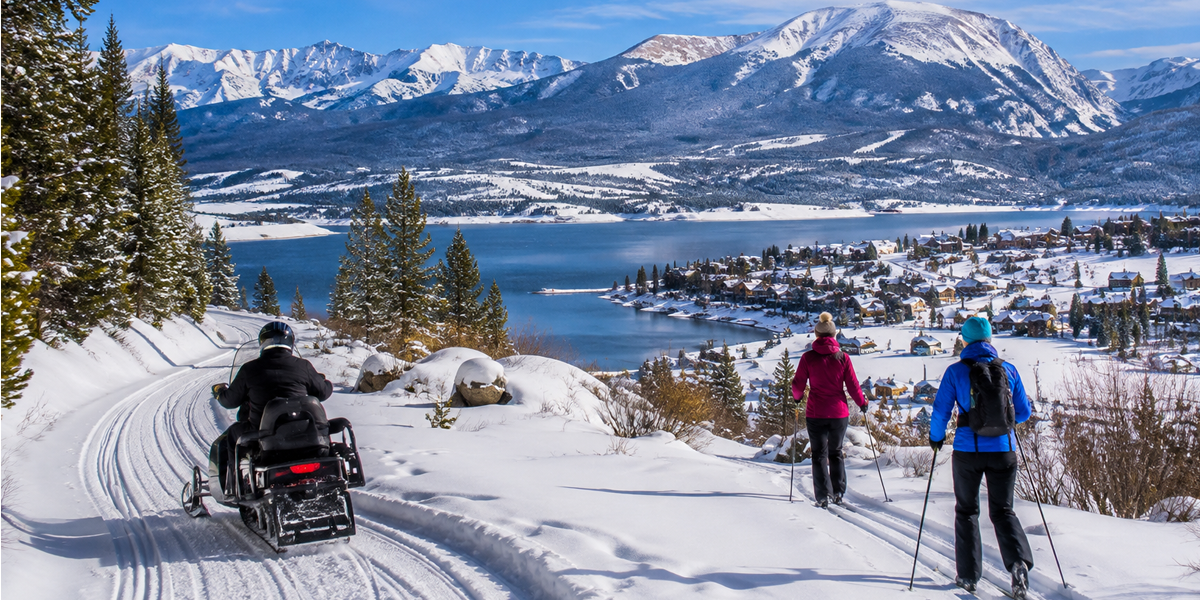
Snowmobiling is one of the activities most closely associated with winter in Grand Lake. The destination is widely promoted as the “Snowmobile Capital of Colorado,” and the area has an extensive network of snowmobile trails and winter riding opportunities. What makes snowmobiling particularly distinctive here is the scale of the surrounding landscape. Riders can move beyond the immediate town environment and experience the forests and open terrain of the surrounding mountain region. Colorado.com notes that Grand Lake has a large system of snowmobile trails and that snowmobiles can access routes through the town area, subject to local rules and designated routes.
For visitors who have never tried snowmobiling, the important consideration is not simply finding a machine and heading into the mountains. Weather, snow conditions, trail conditions, equipment and local regulations all matter. Visitors should use established operators and check current trail conditions before heading out.
A Different Way to Experience the Rocky Mountains
Snowmobiling changes the scale of a winter visit. A snowshoe excursion may take you quietly through a forest, while a snowmobile allows you to cover substantially more terrain and experience a larger portion of the surrounding landscape.It is also one of the activities that makes Grand Lake distinct from a traditional ski-resort vacation. You do not need to spend the entire day on a ski slope to have an active winter adventure.
Cross-Country Skiing at Grand Lake Nordic Center
Cross-country skiing provides a completely different winter experience from downhill skiing. Instead of riding a chairlift and descending a mountain, Nordic skiing is about traveling through the landscape under your own power.The Grand Lake Nordic Center is one of the area’s principal destinations for this activity. Colorado.com reports that the center maintains approximately 35 kilometers of trails for both classic and skate skiing and accommodates a range of experience levels. This makes Nordic skiing an interesting option for travelers who want exercise, scenery and a more immersive experience in the winter environment.
The pace is slower than downhill skiing, which also makes it possible to pay more attention to the landscape. Instead of focusing primarily on the next descent, you are moving through forests and open areas while taking in the surrounding mountains.
Cross-Country Skiing for Different Experience Levels
One of the advantages of Nordic skiing is that it can be approached at different levels. Experienced skiers may want longer outings, while beginners can start with shorter routes and become familiar with the equipment and technique. Because snow conditions change throughout the season, it is always worth checking the current trail conditions and operating information before planning a specific route.
Snowshoeing Around Grand Lake
Snowshoeing is one of the simplest ways to explore the winter landscape around Grand Lake. You do not need to be an experienced skier, and the activity allows you to move at a pace that makes it easier to appreciate the forest, snow and surrounding mountains. Rocky Mountain National Park offers winter recreation on its west side near Grand Lake, and the National Park Service specifically identifies snowshoeing as an appropriate way to explore the park during winter.
The experience can be remarkably quiet. Once you leave the more developed areas, the sounds of the town disappear and the landscape becomes dominated by snow-covered trees, mountain views and winter conditions.
Snowshoeing in Rocky Mountain National Park
The west side of Rocky Mountain National Park provides access to winter landscapes around Grand Lake. The National Park Service notes that winter and spring conditions can vary considerably by elevation, with snow and ice remaining on many trails and deeper snow at higher elevations. This is important because a trail that appears relatively easy during summer can become a substantially different experience when covered with snow.
Visitors should check current park conditions before heading out and carry appropriate equipment. Depending on the elevation and snow depth, traction devices or snowshoes may be necessary.
Ice Fishing on Grand Lake
When winter temperatures create suitable ice conditions, fishing becomes another important part of Grand Lake’s winter recreation. Ice fishing is deeply associated with the region, and Grand Lake Tourism highlights it alongside snowmobiling, snowshoeing and Nordic skiing.The experience is quite different from summer fishing. Instead of sitting beside an open lake, anglers work through the frozen surface and spend time outdoors surrounded by a winter landscape.
Grand Lake also hosts ice-fishing events and competitions during the winter season. Colorado.com and Grand Lake tourism information identify ice-fishing tournaments as part of the area’s winter calendar.
Ice Conditions Matter
Ice fishing is one activity where visitors should never rely simply on the fact that other people are on the lake. Ice thickness and safety conditions can vary, and spring temperatures can change conditions quickly. Anyone planning to fish on frozen water should check current local conditions and follow applicable safety guidance rather than assuming the ice is safe because it appears solid.
This becomes particularly important during late winter and early spring, when warming temperatures can change ice conditions significantly.
Winter Wildlife Watching
Grand Lake’s location beside Rocky Mountain National Park makes wildlife observation another potential part of a winter trip. Snow changes the landscape and can sometimes make animals easier to spot against the white background, although wildlife sightings are never guaranteed. The important part of winter wildlife viewing is maintaining appropriate distance and avoiding behavior that disturbs animals. Visitors should also remember that winter can be a demanding season for wildlife, making responsible observation particularly important.
A quiet snowshoe excursion or scenic drive can therefore become as much about observing the landscape as reaching a particular attraction.
Rocky Mountain National Park in Winter
Rocky Mountain National Park remains an important part of the Grand Lake experience throughout winter, but visiting the park during this season requires a different approach from a summer trip.The National Park Service describes winter and spring as special seasons for recreation but emphasizes that visitors should be prepared for changing conditions. Snow and ice can remain on trails, and higher elevations can retain substantial snow well into spring.
For travelers coming from Grand Lake, the park provides opportunities for snowshoeing, winter hiking and experiencing the landscape without the same conditions found during the warmer months.
Winter Changes the Park Experience
One of the biggest differences is that you cannot simply assume that the roads, trails and facilities will operate as they do during summer.
Winter conditions can affect access, trail surfaces and travel times. The National Park Service recommends checking conditions before visiting and preparing for rapidly changing mountain weather. That preparation is not merely a formality. In the Rocky Mountains, conditions can change quickly, particularly when temperatures, wind and snowfall interact at higher elevations.
Spring in Grand Lake Is a Transition, Not a Switch
Spring can be one of the most misunderstood seasons in the Rocky Mountains. In lower elevations, snow may begin melting and trails can become muddy, while higher elevations may remain completely snow-covered.The National Park Service specifically warns visitors that from October into early June, winter conditions can still be expected in much of Rocky Mountain National Park. At lower elevations, visitors may encounter a combination of snow, ice, mud and dry ground, while higher elevations can remain covered in snow.
This means that a March or April visit should not automatically be planned like a summer hiking trip.
Hiking in Early Spring
Lower-elevation trails may begin to become accessible as temperatures rise, but conditions can vary substantially from one trail to another. The safest approach is to check the current condition of the specific trail and be prepared for more than one type of surface. The National Park Service recommends traction devices for icy conditions and notes that snowshoes may be necessary in areas with deeper snow.
This variability can actually make early spring interesting for experienced visitors. You may encounter a landscape that is simultaneously showing signs of spring in one area while remaining completely winter-like at higher elevations.
Trail Ridge Road and Spring Travel
One correction I would make very clearly from the original article concerns Trail Ridge Road.
The original article presents spring as an ideal time to take a scenic drive along Trail Ridge Road. That is too broad and can be misleading. Trail Ridge Road normally closes for the winter season because of snow and does not reopen until later in spring. Grand Lake’s official tourism information specifically states that the road closes in late October and does not reopen until May, meaning travelers between Grand Lake and Estes Park need an alternate route during the closure period.Therefore, visitors planning a winter or early-spring trip should not assume that they can drive across Rocky Mountain National Park via Trail Ridge Road.
When Trail Ridge Road Reopens
The reopening is dependent on snow removal, weather and road conditions, so it is better to verify the current status with the National Park Service before planning a trip around the highway. Once it is open, the road becomes one of the most spectacular scenic drives in Colorado. But that belongs to the later spring, summer and fall travel discussion rather than being presented as a standard winter activity.
Explore Grand Lake Village
Outdoor recreation is the main attraction, but the town itself deserves time on the itinerary.Grand Lake has a historic mountain-town character, with businesses, restaurants and shops concentrated around the community and its lakefront. Colorado.com highlights the historic boardwalk along Grand Avenue as an area where visitors can explore local shops and dining. Winter gives the town a very different atmosphere from summer. Snow-covered streets, frozen water and shorter days create a quieter alpine environment, while winter visitors can still enjoy local businesses and seasonal events.
For someone spending several days in the area, it is worth leaving time to explore the town rather than treating it simply as a starting point for outdoor activities.
Winter Events in Grand Lake
Grand Lake’s winter identity is also reflected in its seasonal events. Colorado.com mentions events including the annual tree lighting, ice-fishing tournaments and the Annual Pond Hockey Classic. The town has also hosted winter sporting events such as snowmobile races, ice-fishing contests and ice hockey tournaments. Because event dates and programming change from year to year, travelers should check the current calendar before building an itinerary around a particular event.
Ice Skating and Winter Recreation
Ice skating can also be part of a Grand Lake winter itinerary when local conditions and facilities permit. The Town of Grand Lake has operated an ice rink near Headwaters Marina, with seasonal skating information published by the town. This is another example of why current information matters when writing about seasonal mountain activities. Opening dates, ice conditions, rental arrangements and operating hours can change depending on weather and the season. For visitors traveling with children, however, seasonal ice skating can provide a nice complement to more demanding activities such as snowmobiling or Nordic skiing.
Skiing Near Grand Lake
Grand Lake itself is not primarily known as a large downhill ski resort, but it can serve as a base for visitors interested in skiing in the broader region.
Grand Lake Tourism identifies Granby Ranch and Winter Park Resort among nearby downhill skiing options. The original article correctly mentions Winter Park as an option, but the new version should make the relationship clearer: Grand Lake is the destination, while nearby ski resorts provide downhill skiing opportunities. That distinction is useful for travelers comparing Colorado mountain towns. Someone who wants to stay directly beside a major ski resort may choose a different destination, while someone who wants a quieter mountain community with access to several winter activities may find Grand Lake more appealing.
A Different Kind of Colorado Winter Vacation
Grand Lake is particularly interesting because it does not require visitors to build their entire vacation around downhill skiing. One day might involve snowmobiling, another could be spent cross-country skiing, and another might combine snowshoeing with time in the town. Ice fishing, wildlife observation and winter photography can fill the quieter parts of the itinerary. That variety makes Grand Lake a good option for families and groups where not everyone wants to spend every day skiing.
Planning a Grand Lake Winter Trip
Planning a winter trip to Grand Lake requires paying attention to conditions rather than relying solely on the calendar.
Check weather forecasts, road conditions and activity availability before leaving. Grand Lake’s tourism organization specifically recommends checking road conditions and being prepared for winter driving, including appropriate tires or chains when required. It also notes that Trail Ridge Road closes during winter and that travelers between Grand Lake and Estes Park need to use an alternate route.
This is particularly important if you are arriving from another Colorado mountain destination.
Driving in the Rocky Mountains
Mountain driving is different from driving on the plains. Snow, ice, reduced visibility and changing conditions can affect travel even when the weather looks reasonable at your starting point.
During winter, allow additional time and avoid building an itinerary around unrealistically tight driving schedules.
For visitors unfamiliar with Colorado mountain roads, private transportation can also be an attractive alternative.
Private Transportation to Grand Lake
For travelers arriving from Denver, Vail, Beaver Creek, Breckenridge or other Colorado destinations, reaching Grand Lake requires planning around mountain roads and seasonal conditions. Great Divide Transportation provides private transportation throughout Colorado’s mountain destinations, allowing travelers to arrange transportation according to their itinerary rather than relying exclusively on shared transportation.
This can be particularly useful for families and groups carrying winter clothing, ski equipment, snowshoes or other outdoor gear.
A private vehicle also allows travelers to travel directly between their pickup location and Grand Lake without having to coordinate several separate transportation connections.
Grand Lake Transportation for Groups
Groups often face additional transportation challenges because everyone has different luggage and equipment requirements.A winter trip might include skis, snowboards, snowshoes, winter clothing and regular luggage. The amount of space required can therefore be significantly greater than it would be for a normal city vacation.When arranging private transportation, it is important to provide the passenger count and information about oversized equipment so that the appropriate vehicle can be selected.
Grand Lake in Winter and Spring: What Should You Expect?
The biggest mistake a visitor can make is assuming that winter ends simply because the calendar reaches March.
In Grand Lake and Rocky Mountain National Park, winter conditions can continue well into spring. Snow may remain deep at higher elevations, while lower trails may alternate between ice, mud and bare ground.That means flexibility is one of the most useful things to bring with you.
If a hiking trail is still covered in snow, snowshoeing may be the better option. If a lake is no longer safe for ice fishing, another activity may need to take its place. If Trail Ridge Road remains closed, the itinerary should use an alternate route.
The mountains determine the schedule more than the calendar does.
Why Grand Lake Is Worth Visiting Outside Summer
Grand Lake is sometimes associated primarily with summer recreation, but winter reveals a completely different side of the community.The lake becomes part of a snow-covered landscape, snowmobiling becomes one of the area’s signature activities, Nordic trails provide access to the forest, and Rocky Mountain National Park takes on a quieter winter character.Spring then gradually changes that environment. Snow begins to retreat at lower elevations, wildlife becomes more active and trails slowly transition toward summer conditions, while higher elevations remain firmly in winter.
That transition is what makes a late-winter or spring trip particularly interesting for travelers who want to experience Colorado beyond the standard summer and ski-season itinerary.
Plan Your Grand Lake Adventure
Whether you are interested in snowmobiling, cross-country skiing, snowshoeing, ice fishing, wildlife watching or exploring Rocky Mountain National Park, Grand Lake offers a broad selection of winter and early-spring experiences.The key is to plan according to current conditions. Check the status of trails, roads, lakes and seasonal activities before heading out, and remember that conditions at higher elevations can remain wintry well into spring. The National Park Service recommends preparing for snow and ice, carrying appropriate traction equipment and being ready for rapidly changing mountain weather.
And if Grand Lake is part of a larger Colorado mountain itinerary, arranging transportation in advance can make the journey considerably easier.
Grand Lake Transportation with Great Divide Transportation
Great Divide Transportation provides private transportation for travelers moving throughout Colorado’s mountain communities. If your itinerary includes Grand Lake along with Vail, Beaver Creek, Breckenridge, Winter Park or other destinations, private transportation can provide a comfortable way to move between locations.Winter travel requires additional attention to weather and road conditions, particularly when traveling through the mountains. Having professional transportation allows passengers to concentrate on the trip while the driver handles the road.
For airport transfers, resort-to-resort transportation, family trips, private groups and special itineraries, transportation can be arranged around your travel plans.
Great Divide Transportation
Vail Transportation
Private Colorado Mountain Transportation
Phone: 970-763-8169
Grand Lake offers a side of Colorado that is easy to miss if you only think about traditional ski vacations. Come for the snow, stay for the mountain landscape, and give yourself enough time to experience the town, the lake and the surrounding national park.