Whitewater Rafting in Vail, Colorado
When summer arrives in Vail, the mountains take on a completely different personality. The snow that covered the slopes during ski season begins to disappear, the forests turn green, wildflowers appear across the higher elevations, and the rivers fill with the snowmelt flowing down from the surrounding mountains
This is when whitewater rafting near Vail, Colorado, becomes one of the most exciting ways to experience the Rocky Mountains.
And rafting in Vail is not simply about getting into a raft and going down a river. The Vail Valley gives visitors access to several different waterways and a remarkable range of experiences, from relatively gentle stretches suitable for families and first-time rafters to powerful Class IV and Class V whitewater intended for experienced paddlers.
The important thing is knowing the difference.
A family visiting Vail for the first time may be looking for a scenic river trip where children can enjoy the water, canyon scenery and occasional rapids. Another group may be searching for a serious adrenaline rush on the Eagle River. Both experiences are possible around Vail, but they are very different adventures.
That variety is what makes Vail whitewater rafting such an appealing summer activity.
Why Go Whitewater Rafting in Vail?
Vail is often associated with skiing, luxury hotels and winter vacations, but the geography that makes the destination extraordinary in winter also creates exceptional summer adventures. The rivers surrounding the Vail Valley are fed largely by mountain snowmelt. As the snowpack disappears, water moves through the surrounding valleys and creates the conditions for rafting, kayaking and other river activities. According to Discover Vail, guided rafting trips in the region range from Class I through Class V, with opportunities on the Eagle, Colorado and Arkansas rivers. The character of the experience changes dramatically depending on the river section, water level and time of year.
This is important because there is no single definition of “Vail rafting.”
You could spend part of a summer day floating through scenic canyon country on relatively moderate water, or you could find yourself paddling through continuous rapids that require concentration, teamwork and an experienced guide.
The mountains provide the backdrop in both cases, but the experience on the water can be completely different.
When Is the Best Time for Rafting Near Vail?
The rafting season is closely connected to snowmelt.
Discover Vail currently identifies June through early September as the primary season for whitewater rafting around Vail. Vail Mountain also notes that the peak rafting season typically falls between Memorial Day and Labor Day, although the exact conditions vary from year to year depending on snowpack and river flows. Early summer can bring particularly energetic water as mountain snow melts and rivers rise. Later in the summer, some stretches can become more approachable as flows decrease.
This is why experienced rafting outfitters pay close attention to river conditions rather than relying solely on a calendar.
A trip described as Class III, for example, can feel substantially different at one flow level than another. Discover Vail specifically recommends checking current water conditions and working with an experienced outfitter because river difficulty can change as water levels fluctuate.
In other words, the river determines the experience.
Understanding Whitewater Rafting Classes
If you have never gone rafting in Colorado, one of the first things you should understand is the river classification system. Whitewater is generally rated from Class I to Class V. The scale describes the technical difficulty and character of rapids, although actual conditions can change depending on water level, obstacles and other factors.
Class I: Gentle and Family-Friendly
Class I is generally the easiest category. The water may have small waves and relatively simple navigation, making these sections appropriate for beginners and, depending on the outfitter and specific trip, younger families. For visitors who are more interested in enjoying the scenery and experiencing a river than seeking adrenaline, Class I and easier Class II trips can be an excellent introduction.
Class II: A Little More Adventure
Class II introduces more noticeable rapids, waves and maneuvering.
This is often where rafting begins to feel like a real adventure without becoming overwhelmingly technical. Discover Vail describes Class II as an option for groups and first-time rafters looking for more excitement while still remaining within a manageable level of difficulty.
Class III: More Technical and More Exciting
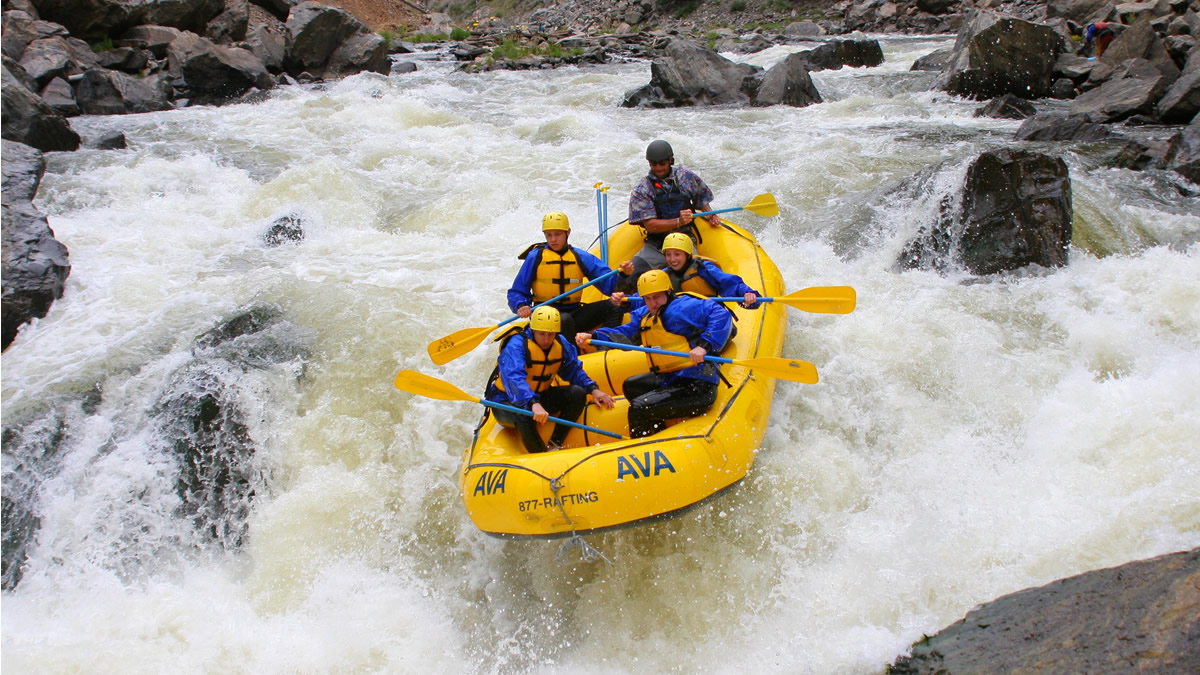
Class III brings larger waves, more maneuvering and more demanding rapids. Discover Vail describes Class III water as having medium waves and significant maneuvering requirements, making it more appropriate for rafters with some experience or for guided trips where professional river guides control the navigation.
For many visitors, this is the point where rafting becomes a genuine adrenaline experience.
Class IV and V: For Experienced Rafters
Class IV and V are considerably more demanding.
Class IV can involve large waves, long rapids, significant drops and technical maneuvers. Class V is reserved for highly experienced paddlers and demanding sections of river with substantial technical challenges. These are not simply “more exciting versions” of a family float. They require appropriate experience, physical ability, safety equipment and professional guidance.
For visitors unfamiliar with Colorado whitewater, choosing a professional outfitter is essential when considering more advanced river sections.
The Eagle River: One of Vail’s Signature Rafting Experiences
If you are searching specifically for whitewater rafting near Vail, the Eagle River should be near the top of your list.
The river flows through the Vail Valley and offers several different sections, meaning that the experience can range from moderate water to much more challenging whitewater. Discover Vail identifies the Upper and Lower Eagle among the area’s rafting opportunities, with difficulty depending on the specific section. One of the most famous sections is Dowd Chute, associated with more advanced whitewater on the Eagle River. It is a very different proposition from a scenic family float and is best approached through a professional outfitter familiar with current river conditions.
For experienced rafters, the Eagle can provide exactly what they are looking for: cold mountain water, fast-moving rapids, dramatic scenery and a strong sense that the river is controlling the itinerary.
That is part of the attraction.
You are not simply sightseeing from the water. You are interacting with the landscape.
The Colorado River: Scenic Rafting and Glenwood Canyon
For families, first-time rafters and travelers who want a combination of scenery and excitement, the Colorado River offers another excellent option.
One of the best-known experiences is rafting through Glenwood Canyon, where the river moves through a spectacular mountain environment surrounded by steep canyon walls.Vail Mountain currently highlights Shoshone rafting on the Colorado River as one of the major options near Vail. The Shoshone section is generally associated with Class III rapids, while other Colorado River trips provide gentler experiences.
The attraction here is the combination of river and landscape. Instead of spending the entire trip focused on navigating difficult rapids, there are moments when you can look around and appreciate the canyon, forest and surrounding Rocky Mountain scenery. For visitors who have never rafted before, this can be an ideal introduction to Colorado’s rivers.
The Arkansas River and Browns Canyon
Another major rafting destination accessible from the Vail area is the Arkansas River, including the Browns Canyon region.
Browns Canyon is well known for its combination of scenery and whitewater. Vail’s official travel guide describes rafting there as an option for families with children of appropriate age, first-time rafters and visitors looking for a balance between excitement and calmer sections of river. The Arkansas is particularly interesting because it provides a much broader rafting landscape. Different sections can offer very different levels of difficulty, allowing professional outfitters to match trips to the experience and expectations of their guests. For someone planning a Colorado vacation rather than simply a short activity from Vail, the Arkansas River can also become part of a larger adventure itinerary.
Gore Creek: Whitewater in the Heart of Vail
One of the most unusual things about Vail is that you do not always have to travel far from the village to encounter whitewater.
Gore Creek runs directly through Vail, and the town has its own Whitewater Park.
The Town of Vail describes the Whitewater Park as an adjustable whitewater system designed to respond to water levels, with access from Gore Creek Promenade in Vail Village.
This creates a fascinating contrast with the larger river trips outside town.
You can spend the morning walking through Vail Village, have lunch near Gore Creek and still watch paddlers navigating whitewater in the middle of the community.
The Vail Whitewater Race Series also uses Gore Creek for organized kayak, stand-up paddleboard and two-person raft competitions. The 2026 series was scheduled in Vail Village, with course conditions determined according to river flows. For visitors interested in the sport itself, this is a reminder that whitewater is not simply a commercial tourist activity in Vail. It is part of the local outdoor culture.
Whitewater Rafting for Families
One of the most common questions visitors ask is whether rafting in Vail is appropriate for children. The answer depends on the specific trip, river section, water conditions and minimum age established by the outfitter.
There are family-friendly options on sections of the Colorado and Eagle rivers, but age requirements can vary considerably between trips. For example, Vail’s current travel information lists Colorado River trips with minimum ages that can be substantially younger than those required for more challenging Eagle River excursions.
This is why families should not simply search for “Vail rafting” and book the first trip they find.
Instead, look at the river classification, minimum age, duration, physical requirements and expected water conditions.
A good outfitter will help you select an experience that matches your group rather than simply selling you the most exciting trip available.
What Is a Typical Rafting Day Like?
For someone who has never gone whitewater rafting, the process can seem more complicated than it actually is. Most guided trips begin with a meeting point where guests check in and receive safety instructions. Depending on the outfitter, transportation to the river put-in may be included.
Once at the river, guides provide the necessary safety equipment and explain basic paddling commands, how to position yourself in the raft and what to do if the boat encounters difficult water.
Then the real adventure begins.
The guide controls the navigation, but everyone in the raft contributes. Paddling together is part of the experience, and communication between the guide and passengers becomes particularly important as the river becomes faster. Between rapids, there are usually moments when you can simply enjoy the scenery and appreciate the scale of the mountains around you.
That combination of teamwork, adrenaline and scenery is what makes rafting so different from simply taking a scenic drive through Colorado.
What Should You Wear for Rafting in Vail?
Colorado summer weather can be warm, but the water can remain extremely cold.Wear clothing appropriate for getting wet and follow the outfitter’s recommendations. Quick-drying layers are generally more practical than cotton, and secure footwear is important.
Bring sun protection as well. Even when temperatures feel comfortable, high-altitude sunlight can be intense.
Your rafting outfitter will provide the essential safety equipment required for the trip, but the exact equipment and clothing recommendations can vary according to the river, weather and type of excursion.The best approach is simple: ask the outfitter what they recommend before your trip rather than assuming that every rafting excursion requires the same gear.
Why River Conditions Matter So Much
One of the most important things to understand about Colorado rafting is that the river is not static.Water levels change. Snowpack changes. Weather changes. The same stretch of river can feel dramatically different at different flows.Discover Vail specifically warns that river difficulty can change with fluctuations in water levels and recommends consulting experienced rafting companies for current conditions and ratings.
This is one of the strongest reasons to use a professional guide.
A local guide is not simply there to steer the raft. Guides understand the river, read the water and adjust the trip according to conditions.
For visitors who are unfamiliar with Colorado’s rivers, that local knowledge is invaluable.
Choosing the Right Vail Rafting Trip
The best rafting trip is not necessarily the most difficult one.
If you are traveling with children or have never rafted before, look for a family-friendly or beginner-oriented trip. A Class II experience may provide exactly the amount of excitement you want.If you are comfortable with whitewater and want a more demanding experience, consider Class III or higher trips where appropriate.Experienced rafters may be interested in more technical sections of the Eagle, Arkansas or other rivers, but these trips should be selected based on actual experience and current river conditions.
Think about your group before choosing the river.
Are you looking for scenery? Family adventure? A full day outdoors? Adrenaline? A combination of rafting and sightseeing?
Once you answer that question, choosing the right experience becomes much easier.
Rafting and the Rest of Your Vail Summer Vacation
One of the reasons rafting works so well in Vail is that it does not have to dominate your entire vacation.You could spend one day rafting the Eagle or Colorado River and dedicate another day to hiking, mountain biking, horseback riding or exploring Vail Village.You might also combine a morning river trip with an afternoon spa treatment or a relaxed dinner in the village.
That flexibility is part of what makes summer in Vail so appealing.
The destination does not require you to choose between adventure and luxury. You can have both.
Getting to Vail for Your Rafting Adventure
Transportation is another detail worth considering when planning an outdoor adventure in Vail.If you are flying into Colorado, the easiest way to begin your vacation is often to arrange transportation directly from the airport to your hotel in Vail rather than dealing with a rental car after a long flight.Great Divide Transportation provides private transportation to Vail and the surrounding mountain communities, including service from Denver International Airport (DEN) and Eagle County Regional Airport (EGE).
Private transportation can also be useful for groups carrying outdoor equipment or traveling with children because the trip can be arranged around your schedule rather than a shared transportation timetable.For travelers combining several Colorado destinations, Great Divide Transportation can also connect Vail with Beaver Creek, Breckenridge, Aspen, Snowmass and other mountain communities.
Whether your summer itinerary includes whitewater rafting, mountain biking, hiking or simply enjoying Vail’s luxury resorts, having reliable transportation between the airport, hotel and surrounding destinations makes the trip considerably easier.
Plan Your Whitewater Rafting Adventure in Vail
Whitewater rafting adds an entirely different dimension to a summer vacation in Vail.
In winter, the mountains are experienced through snow. In summer, the rivers reveal another side of the Rockies: cold snowmelt rushing through mountain valleys, canyon walls rising above the water and forests stretching along the riverbanks.The best part is that there is no single way to experience it.Families can choose gentler trips. First-time rafters can learn the basics with professional guides. Experienced paddlers can seek more challenging sections of the Eagle, Colorado and Arkansas rivers. And travelers who simply want to experience the beauty of Colorado from the water can choose scenic rafting experiences that balance adventure and relaxation.
The key is choosing the right river, the right difficulty and the right outfitter for your group.
Vail whitewater rafting is not just another summer activity. It is one of the most direct ways to experience the energy of the Rocky Mountains—and one of those Colorado experiences that you will probably remember long after the trip is over.