
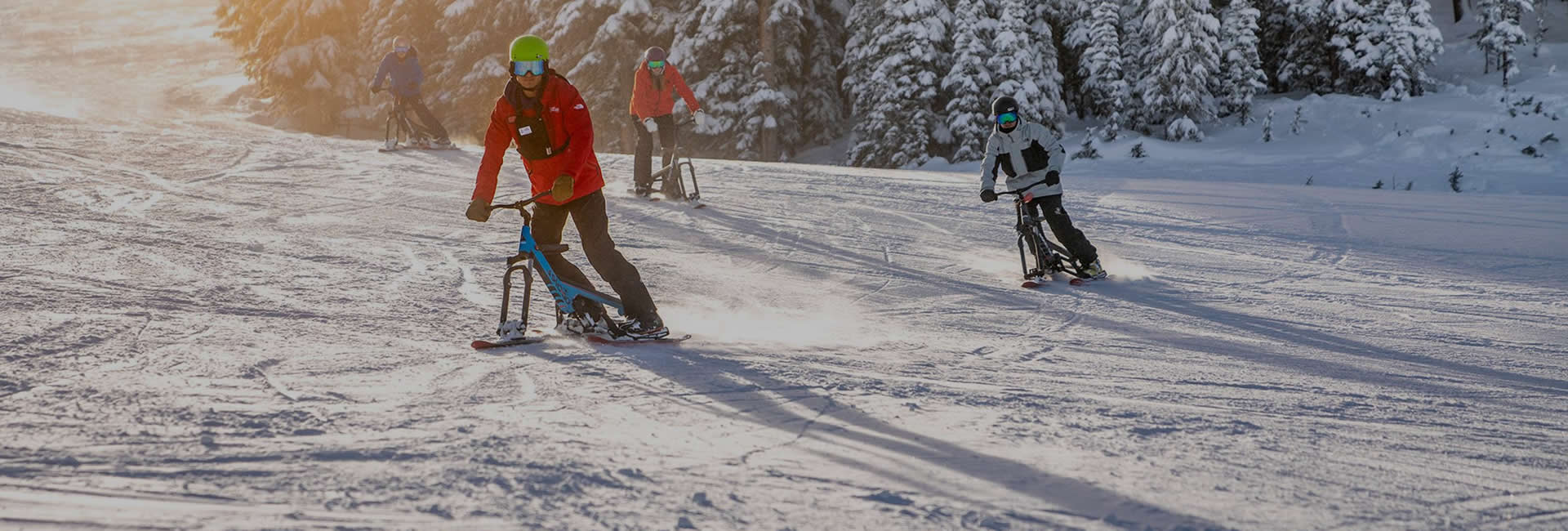
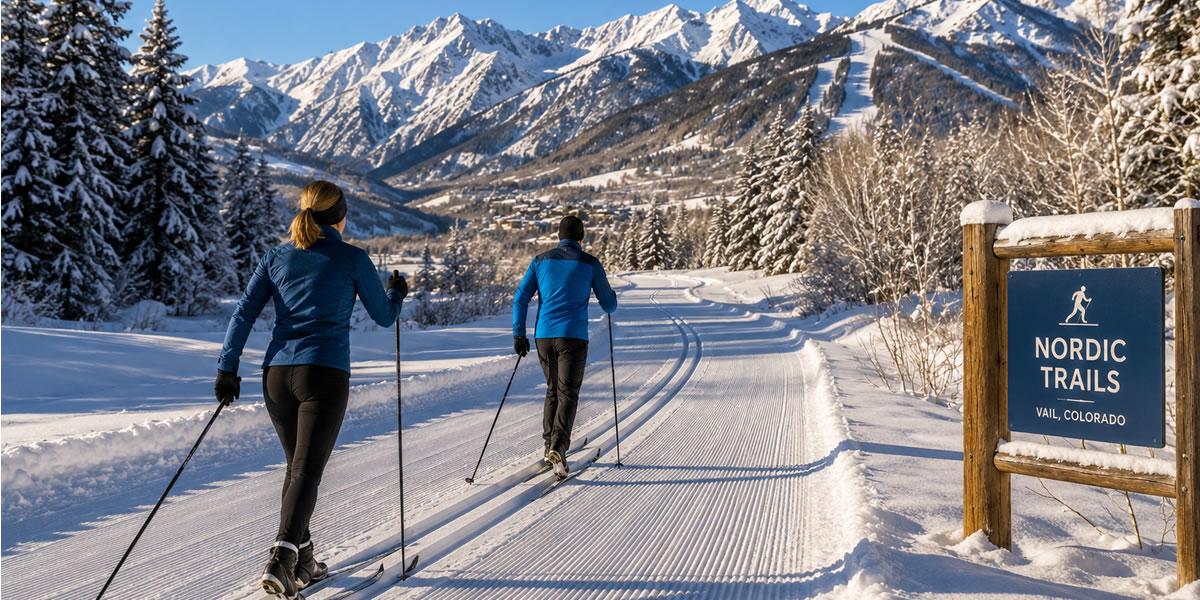
When most people picture winter in Vail, they imagine perfectly groomed alpine runs, deep powder, chairlifts climbing toward the Gore Range, and skiers carving their way down Vail Mountain. But there is another side of winter here that is quieter, more peaceful, and every bit as beautiful. Away from the crowds of the downhill slopes, Nordic skiing offers visitors the opportunity to glide through snow-covered forests and open meadows while taking in some of the most spectacular scenery in Colorado.
Nordic skiing, also commonly called cross-country skiing, is one of the best ways to experience the Vail Valley at a slower and more natural pace. Instead of racing downhill, you move across relatively gentle terrain under your own power, using a combination of balance, rhythm, and endurance. The experience is surprisingly immersive. You hear the snow beneath your skis, the wind moving through the trees, and, on a quiet morning, almost nothing else.
For visitors who already love skiing, Nordic skiing offers an entirely different way to experience the mountains. For those who don’t ski downhill at all, it provides an opportunity to participate in a genuine Colorado winter adventure without having to master steep slopes or chairlift loading. And for families, couples, and active travelers, it can be one of the most rewarding ways to spend a winter morning or afternoon in Vail.
The centerpiece of the local Nordic experience is the Vail Nordic Center, where the Vail Golf Club transforms during the winter months into an extensive network of groomed Nordic trails surrounded by snow-covered mountains and the dramatic scenery of the Gore Range. The center offers equipment rentals and instruction, making it particularly approachable for visitors who are trying cross-country skiing for the first time.
What Is Nordic Skiing?
Nordic skiing is a broad term that describes several forms of skiing in which the heel of the boot is not permanently attached to the ski. This is one of the fundamental differences between Nordic skiing and traditional alpine skiing.In downhill skiing, both the toe and heel of the boot are secured to the binding. That configuration provides stability when traveling down steep slopes, but it is not particularly practical when you’re trying to walk or glide across relatively flat terrain.
Nordic equipment is designed differently. Your toe remains attached while your heel can move naturally, allowing you to lift your foot, push forward, and glide across the snow. Once you become accustomed to the movement, Nordic skiing begins to feel surprisingly natural.
The sport also emphasizes endurance rather than gravity. Instead of using a chairlift to gain elevation and then relying on the mountain to provide the momentum, you’re responsible for generating your own forward movement. That makes Nordic skiing both a recreational activity and an excellent full-body winter workout.
The beauty of it is that you don’t need to be an elite athlete to enjoy it. A beginner can start with a short, relatively flat trail and gradually increase the distance and difficulty as confidence develops.
Why Vail Is an Excellent Place to Try Cross-Country Skiing
Vail is particularly well suited to Nordic skiing because the valley provides a combination of accessible terrain, reliable winter conditions, spectacular scenery, and a well-developed Nordic center.The Vail Nordic Center operates from the Vail Golf Club during the winter season, transforming the summer golf course into a winter landscape of groomed tracks and trails. The terrain includes flatter sections that are ideal for beginners as well as rolling routes that become more demanding as your skills improve.
What makes the setting particularly memorable is the scenery. Instead of looking at a mountain from a crowded ski lift, Nordic skiers move through the valley with the Gore Range rising dramatically around them. The surrounding forests become covered in snow, the meadows turn into wide white expanses, and the entire landscape takes on a peaceful quality that can be difficult to appreciate when you’re focused on navigating a downhill ski run.
This is one of those Vail experiences where the destination is important, but the journey itself is equally rewarding.
The Vail Nordic Center
The Vail Nordic Center is the natural starting point for anyone interested in cross-country skiing in Vail. During winter, the former golf course becomes a dedicated Nordic recreation area with groomed trails, equipment rentals, lessons, and facilities designed specifically for winter visitors.For beginners, this makes the experience considerably easier. You don’t have to arrive with an entire collection of specialized equipment or already know how to move on Nordic skis. The center can provide the essential equipment and instruction needed to get started, allowing you to concentrate on learning rather than worrying about logistics.The trail system also makes it possible to gradually increase the difficulty of your outing. A first-time visitor can begin with an introductory loop, learn the basic movement, and then decide whether to continue onto longer or more challenging terrain.
Experienced Nordic skiers, meanwhile, can use the center as a base for exploring a much larger network of trails and connecting routes throughout the area.
Exploring the Vail Nordic Center Trails
One of the best things about Nordic skiing in Vail is that you don’t have to commit to a long expedition the moment you arrive. The trail system allows you to build your experience gradually.
Teaching Loop
The Teaching Loop is exactly what its name suggests: a short introductory route where beginners can become comfortable with their equipment before heading farther into the trail network.This is an excellent place to learn how the skis respond, practice maintaining balance, and understand the basic rhythm of cross-country skiing. It also gives instructors an opportunity to correct technique before a beginner tackles longer sections of the trail.
For someone who has never tried Nordic skiing, spending a little extra time here is not wasted time. Learning how to glide efficiently at the beginning can make the remainder of the outing much more enjoyable.
Sunburst Loop
The Sunburst Loop provides a natural progression from the introductory terrain. It includes a moderate hill and can be approached in either direction, giving beginners an opportunity to experience gentle elevation changes without immediately committing to a difficult route. Combined with the Teaching Loop, it creates a manageable introduction to the sport and allows new skiers to discover how climbing and descending feel on Nordic equipment.
Stable Flats
Once you become comfortable on your skis, Stable Flats offers a longer, flatter experience. The route extends for more than two kilometers and follows the valley floor, providing a relatively relaxed way to increase your distance. This type of terrain is particularly enjoyable for visitors who want to focus on the rhythm of skiing rather than constantly thinking about hills. You can settle into a steady pace, look around at the mountains, and simply enjoy being outdoors.
Because some surrounding winter trails are also used by snowshoers and fat-tire cyclists, it is important to remain aware of designated Nordic tracks and respect the trail system.
Gore Creek and the Gore Range
For visitors looking for more scenery and a little more challenge, routes connecting the Training Loop, Chicken Ridge, and Gore Creek Flats offer a rewarding progression. These trails follow sections of Gore Creek and move through open meadows with views toward the Gore Range. The terrain becomes more varied, with both climbs and descents, but that variation is part of what makes the route interesting.
This area can also provide a greater sense of solitude. Once you move farther from the easiest introductory trails, the experience begins to feel less like a recreational facility and more like an excursion into the winter landscape.
Longer Loop Options
More experienced visitors can connect several sections of the Nordic trail network to create substantially longer outings. One route linking the Training Loop with Fricker’s Freeway and Stable Flats can create a loop approaching five miles. For a first-time visitor, there is no need to attempt the longest route. Nordic skiing is much more enjoyable when you choose a distance appropriate for your fitness and experience rather than treating the outing as a race.
The goal is to enjoy the mountain.
Classic Cross-Country Skiing vs. Skate Skiing
There are two primary techniques that visitors are likely to encounter at a Nordic center: classic skiing and skate skiing.
Classic Nordic Skiing
Classic skiing is generally the best place for beginners to start. The movement resembles a natural walking or running stride, with the skis traveling mostly parallel to one another while the skier alternates the legs.
On groomed trails, classic skiing often takes place within parallel tracks specifically prepared for this technique.
The movement looks simple, but developing an efficient rhythm takes practice. Beginners should concentrate on balance and smooth weight transfer rather than trying to move quickly. Once the basic motion becomes natural, the skis begin to glide beneath you with surprisingly little effort.
For a first Nordic skiing experience in Vail, classic skiing is usually the most approachable option.
Skate Skiing
Skate skiing is a faster and more dynamic technique that resembles the motion of a speed skater. Instead of moving the skis forward and backward in parallel tracks, the skier pushes diagonally outward using the edges of the skis.It is an efficient technique for experienced Nordic skiers and can be extremely fast, but it requires more balance, coordination, and conditioning than classic skiing.
Skate skiing should be performed in designated areas rather than on classic tracks. Maintaining the integrity of groomed classic tracks is an important part of Nordic trail etiquette.
Other Forms of Nordic Skiing
Nordic skiing encompasses more than traditional cross-country skiing.
Telemark Skiing
Telemark skiing combines elements of Nordic technique with downhill skiing. The equipment is designed for off-trail terrain and allows the skier to make distinctive telemark turns with the heel free.It requires more technical ability than basic cross-country skiing and is generally better suited to experienced winter athletes.
Alpine Touring
Alpine touring, sometimes called ski touring, uses specialized equipment that allows the skier to climb uphill with the heel released before switching the bindings into downhill mode for the descent.Although it shares the free-heel concept with Nordic skiing, alpine touring is fundamentally different from the groomed-trail cross-country experience available at the Vail Nordic Center.
Visitors should not assume that Nordic skiing and backcountry touring are interchangeable. The equipment, terrain, techniques, and safety considerations can be substantially different.
How Difficult Is Cross-Country Skiing?
One of the most common misconceptions about Nordic skiing is that because the terrain is relatively flat, the activity must be easy.
It isn’t.
Cross-country skiing can be an excellent workout because you are generating your own momentum rather than being carried uphill by a chairlift. The effort required depends on your speed, terrain, snow conditions, and technique.
The good news is that the difficulty is highly adjustable.
A beginner can choose a short, relatively flat route and take frequent breaks. An experienced skier can cover several miles at a sustained pace and incorporate steeper sections into the outing.This flexibility makes Nordic skiing particularly appealing to groups. Everyone doesn’t necessarily need to complete the same distance.
Nordic Skiing Is an Excellent Full-Body Workout
There is a reason cross-country skiers are often associated with exceptional endurance.
Unlike many winter activities that concentrate heavily on the legs, Nordic skiing engages much of the body. Your legs provide propulsion and stability, your arms and shoulders work with the poles, and your core helps maintain balance and control.
The result is an activity that combines cardiovascular conditioning with muscular endurance.
The calorie expenditure varies considerably depending on body weight, pace, terrain, snow conditions, and technique, so it is more useful to think of Nordic skiing as a sustained full-body workout rather than focusing on a single calorie number.
At altitude, the effort can feel greater than visitors expect, particularly if they are not accustomed to exercising in Colorado’s mountain environment.
The best approach is to start slowly, stay hydrated, and allow your body time to adjust.
What Should You Wear for Nordic Skiing in Vail?
Dressing correctly can make the difference between an enjoyable outing and an uncomfortable one.
The key is layering.
Unlike sitting on a chairlift in downhill ski clothing, Nordic skiing keeps you moving almost continuously. You may feel cold when you first step outside, but after several minutes of climbing or gliding, your body temperature can rise considerably.A moisture-wicking base layer helps move perspiration away from the skin. A lightweight insulating layer provides warmth when needed, while a breathable outer shell protects against wind and snow.
Avoid wearing a heavy insulated jacket unless conditions require it. Overheating can become just as uncomfortable as being cold, particularly during longer outings.Your hands and feet also deserve attention. Thin moisture-wicking socks combined with appropriate winter footwear are preferable to excessively thick socks that can restrict circulation. Gloves should provide warmth while still allowing you to grip your poles comfortably.
A hat or headband, neck gaiter, sunglasses, sunscreen, and lip protection are also useful in Colorado’s high-altitude winter environment.
Don’t Underestimate the Colorado Sun
Winter visitors sometimes assume that sunscreen is only necessary during summer.
In Vail, that is a mistake.
Snow reflects sunlight, increasing exposure even on days when the temperature is well below freezing. Colorado’s high elevation also means you’re closer to the sun than you are at lower elevations.A good sunscreen, protective lip balm, and quality sunglasses should be part of your winter gear regardless of whether the sky is completely clear.
On bright bluebird days, the combination of snow, altitude, and sunlight can be surprisingly intense.
Renting Nordic Ski Equipment in Vail
If you’re traveling to Vail specifically to try Nordic skiing, there is no need to purchase a complete equipment setup before your trip.The Vail Nordic Center provides rental equipment designed for the type of skiing you’ll be doing. A typical setup includes Nordic skis with bindings, poles, and appropriate boots. Staff can also help determine what equipment is appropriate for your experience and intended activity.
This is particularly useful for first-time visitors because Nordic equipment looks and feels different from alpine ski equipment.
If you’re unsure whether you’ll enjoy the sport, renting is an excellent way to try it without making a significant investment.
Should You Take a Nordic Skiing Lesson?
For beginners, a lesson is one of the smartest investments you can make.
Nordic skiing may look simple when watching experienced skiers glide effortlessly across the snow, but efficient technique requires proper balance and weight transfer. A few basic mistakes can quickly lead to fatigue.An instructor can teach you how to stand correctly, glide efficiently, use your poles, climb gentle slopes, control your speed, and recover when you lose balance.
The Vail Nordic Center offers individual and group instruction as well as specialized clinics for adults and children.
Even experienced alpine skiers can benefit from instruction because Nordic technique is fundamentally different from downhill skiing.
Groomed Trails or Off-Track Skiing?
For beginners, groomed trails are the obvious choice.
The prepared tracks provide a predictable surface and make it considerably easier to learn the basic movements. You don’t have to worry about finding your own path through deep snow, and the defined trail system makes navigation straightforward.The Vail Nordic Center maintains more than ten miles of groomed Nordic track, giving visitors plenty of room to progress from short introductory outings to longer excursions.
Once your confidence improves, you can consider venturing onto designated off-track terrain.
Off-track skiing provides a completely different sensation because you are no longer guided by prepared tracks. The snow can be softer and the terrain more variable, requiring greater balance and strength.
The Vail Nordic Center also provides a separate network of off-track trails suitable for Nordic skiing and snowshoeing.
What About Backcountry Nordic Skiing?
The backcountry surrounding Vail offers extraordinary winter terrain, but it should not be confused with skiing at the Vail Nordic Center.
Once you leave the managed trail environment, the level of responsibility increases dramatically. Navigation, avalanche awareness, weather, snowpack, equipment, communication, and emergency preparedness all become important considerations.Backcountry skiing should be reserved for people with appropriate training and experience. Visitors who are curious about exploring beyond groomed trails should consider hiring an experienced local guide rather than attempting unfamiliar terrain independently.
A peaceful Nordic outing on a maintained trail and a backcountry expedition are two very different experiences.
Nordic Skiing Etiquette
Part of enjoying Vail’s Nordic trail system is understanding that you’re sharing the snow with other visitors.On groomed tracks, stay within the designated track whenever possible and avoid damaging the prepared surface. If you need to stop, move to the side so that other skiers can continue through safely.
Before stepping out of your track, look behind you and make sure you’re not moving directly into another skier’s path.
Skate skiers should use designated skate lanes rather than crossing or damaging classic tracks.
These simple courtesies make the experience better for everyone and help preserve the carefully groomed trail system that makes Nordic skiing in Vail so enjoyable.
When Is the Best Time to Go Nordic Skiing in Vail?
The Nordic season generally runs through the winter and into early spring, with conditions depending on snowfall, temperatures, and trail operations.
Early morning can be particularly beautiful. The snow is often freshly groomed, the surrounding mountains glow in the morning light, and the trails tend to be quieter.Midday can be more comfortable for visitors who are sensitive to cold temperatures, especially when the sun is shining.
Late winter and early spring can also be excellent, offering longer daylight hours and potentially milder temperatures while maintaining good snow conditions.Rather than choosing a date solely based on the calendar, check current trail conditions and operating information before heading out.
Mountain weather can change quickly, and Nordic skiing is most enjoyable when the trail conditions match your experience level.
Snowshoeing and Nordic Skiing in the Same Area
If you’re traveling with someone who doesn’t want to ski, there’s no reason they have to miss the experience.
Snowshoeing and Nordic skiing can often be enjoyed in the same general winter environment, allowing different members of a group to choose the activity that best matches their interests.Snowshoeing is particularly accessible because it uses a natural walking motion, while Nordic skiing provides a faster and more aerobic experience.
For families, this flexibility can make planning much easier.
One person can explore on snowshoes while another skis, and everyone can meet afterward to enjoy lunch or continue exploring Vail together.
Combine Nordic Skiing with a Day in Vail
A Nordic skiing outing doesn’t have to consume your entire day.
Many visitors start their morning at the Vail Nordic Center, spend several hours on the trails, and then return to Vail Village or Lionshead for lunch and an afternoon of shopping, sightseeing, or relaxing.
Others prefer to make Nordic skiing the centerpiece of an entire winter day.
After skiing through the morning, you might enjoy a long lunch overlooking the mountains, visit one of Vail’s art galleries, relax at a spa, or explore the pedestrian streets before settling into an après-ski dinner.
This is one of the advantages of Vail: you can combine an active outdoor experience with the sophisticated amenities of a world-class mountain resort without traveling long distances between activities.
A Different Way to Experience Vail’s Mountains
There is something uniquely peaceful about moving through Vail under your own power.
Downhill skiing is exhilarating, but it happens quickly. Nordic skiing slows everything down enough for you to notice the details—the patterns in the snow, the texture of the trees, the changing light across the mountains, and the quiet that settles over the valley during winter.
For visitors who want more than another day on the ski slopes, Nordic skiing provides a completely different perspective.
You aren’t simply visiting the mountains.
You’re moving through them.
And that is what makes a day at the Vail Nordic Center such a memorable part of a Colorado winter vacation.
Arrive at the Vail Nordic Center in Comfort
Winter travel in the mountains requires more planning than simply getting from one point to another. Snow-covered roads, changing weather conditions, parking, ski equipment, and unfamiliar mountain routes can quickly turn a relaxing vacation day into a logistical challenge.
Private transportation allows you to eliminate much of that stress.
Aspen Limo Services provides luxury private transportation throughout Colorado, including transportation to Vail, Vail Village, Lionshead, the Vail Nordic Center, luxury hotels, private residences, airports, restaurants, and winter attractions throughout the region.
For travelers arriving from Denver International Airport, Eagle County Regional Airport, or Aspen, a professional chauffeur can handle the mountain drive while you relax and enjoy the scenery. This is particularly valuable during winter, when road conditions can change quickly and travelers may prefer to avoid driving an unfamiliar mountain route.
Whether you’re planning a dedicated Nordic skiing excursion, a family winter vacation, or several days exploring everything Vail has to offer, comfortable private transportation allows you to spend more time enjoying Colorado and less time worrying about the road.
Final Thoughts on Nordic Skiing in Vail
Vail is famous for its downhill skiing, but the valley’s Nordic skiing experience deserves a place on the itinerary of anyone who wants to discover a quieter side of Colorado winter.The Vail Nordic Center makes the sport accessible to beginners while providing enough terrain to keep experienced Nordic skiers interested. Groomed tracks, rolling meadows, mountain views, equipment rentals, and professional instruction create an environment where almost anyone can learn to appreciate the rhythm and freedom of cross-country skiing.
And perhaps that’s the greatest appeal.
You don’t have to be an expert skier. You don’t need to chase speed. You don’t need to spend the entire day on a lift.
You simply need a pair of skis, a little patience, and a willingness to explore.
Once you glide away from the trailhead and the sounds of the village begin to disappear, Vail reveals a completely different personality—quiet, expansive, and remarkably beautiful. Surrounded by snow-covered forests and the towering Gore Range, Nordic skiing offers a chance to experience the Rocky Mountains at your own pace.
For a winter vacation that combines outdoor adventure, fitness, scenery, and the unmistakable character of Vail, spending a few hours at the Vail Nordic Center may become one of the most memorable decisions of your trip.