Fall Colors in Breckenridge, Colorado | Leaf Peeping Guide
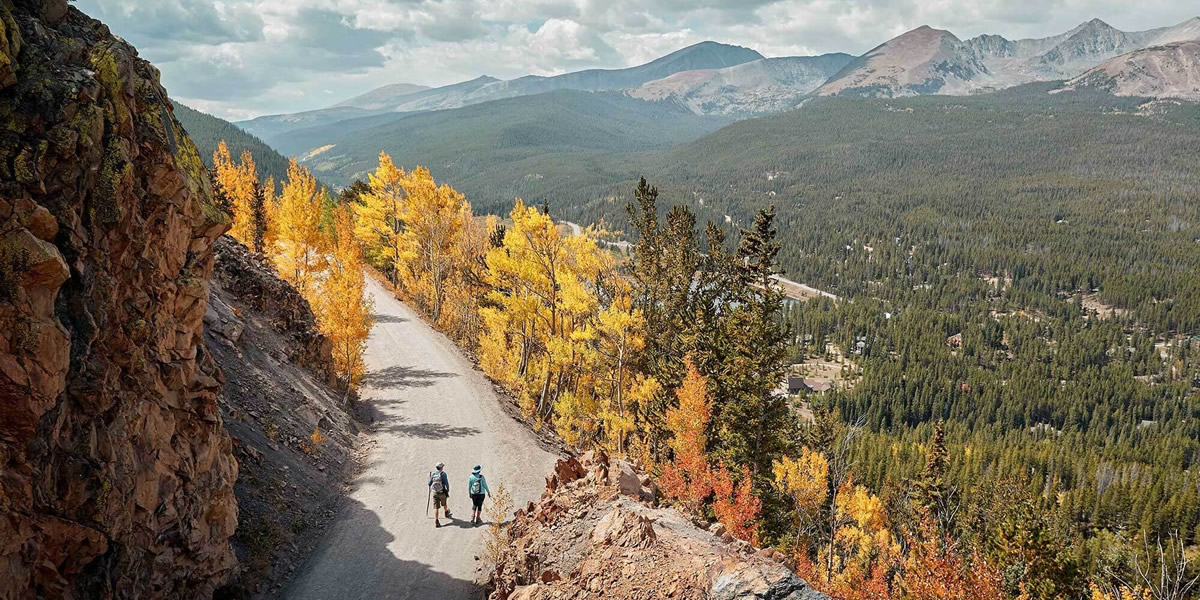
There are few times of year when Breckenridge looks quite like it does in autumn. The green landscape of summer gradually gives way to brilliant shades of gold, yellow and orange as the aspen trees begin their brief seasonal transformation. Against the dark green of the evergreens and the dramatic peaks of the Tenmile Range, the contrast is spectacular, and for a few weeks each year, the mountains surrounding Breckenridge become one of the most memorable places in Colorado to experience fall foliage.
For visitors, this is what makes fall in Breckenridge so special. You don’t have to be an experienced hiker or mountain biker to enjoy it. The colors appear around town, along the Blue River, on nearby trails and throughout the mountain passes surrounding the community. You can spend the morning hiking through an aspen grove, take a scenic drive in the afternoon and finish the day walking along historic Main Street while the mountains turn golden in the late afternoon light.
The season is also remarkably short. Breckenridge’s high elevation means the aspens begin changing earlier than they do in many lower-elevation destinations. Current local guidance places the beginning of the color change around mid-September, with the brightest period commonly occurring during the latter part of September and into early October, although weather can shift the timing from year to year.
That uncertainty is actually part of the experience. There is no guaranteed calendar date when every tree suddenly turns yellow. Different elevations, slopes and locations can change at slightly different times, creating a moving landscape of green, yellow and gold.
If you’re planning a fall trip to Breckenridge specifically for the foliage, the best strategy is to understand where to go, when to visit and how to experience the colors without rushing through them.
When Do the Leaves Change in Breckenridge?
The first question almost every fall visitor asks is also the hardest one to answer with an exact date: When will the aspens be at their peak?
Breckenridge’s high elevation is one of the reasons autumn arrives relatively early. According to current local information, the first noticeable changes typically begin around mid-September. The brightest colors often appear during the last two weeks of September and the first week of October, but temperature, precipitation and other weather conditions can influence the timing.This means that planning a trip for a specific day can be risky if seeing peak color is your only objective. A few warm or cold days can influence how quickly the trees transition, and the best viewing areas can vary as the season progresses.
For that reason, Breckenridge’s Leaf Brief is particularly useful. The local tourism organization publishes updates and photographs during the season so visitors can follow the progression from green to gold and make better decisions about when and where to explore.
In other words, don’t think of fall foliage as a single event that happens on one weekend.
Think of it as a moving season.
Why Fall Is Such a Special Time to Visit Breckenridge
Autumn changes the character of Breckenridge without taking away the things that make the town appealing throughout the year. The summer crowds begin to thin, temperatures become cooler and the mountains take on an entirely different appearance. Hiking and biking remain popular, while scenic drives become especially rewarding because roads that are beautiful throughout the year can suddenly be surrounded by enormous stands of golden aspen.
The official Breckenridge fall information describes autumn as a particularly good time for outdoor recreation, with hiking, biking, fishing, horseback riding, festivals, dining and other activities still available before winter arrives.
There is also something wonderfully transitional about the season.
You can walk through town in the morning with a light jacket, spend the afternoon surrounded by golden aspens and then return to Main Street as temperatures drop in the evening. The days may still be pleasant enough for outdoor activities, but there’s a noticeable crispness in the air that reminds you winter isn’t far away.
For many travelers, that combination makes September and early October one of the most attractive periods to visit Breckenridge.
Where to See Fall Colors in Breckenridge
One of the best things about leaf peeping in Breckenridge is that you don’t have to travel far from town to find beautiful scenery. Aspens are scattered throughout the area, and some of the most accessible views can be found around Breckenridge itself. That makes it possible to experience the fall colors without dedicating an entire day to a difficult hike or long scenic drive.
The best destination depends on the type of experience you’re looking for.
If you want to combine foliage with history, the French Gulch area is particularly interesting. If you’d rather walk through town and enjoy the colors at a slower pace, Main Street and the Blue River provide an easy introduction to autumn in Breckenridge. And if your goal is a classic Colorado scenic drive surrounded by enormous stands of aspens, Boreas Pass deserves a place near the top of your itinerary.
The important thing is not to assume that there is one single “best” place.
Breckenridge’s fall landscape changes constantly depending on elevation, weather and time of day.
French Gulch and the Golden Horseshoe
Just east of Breckenridge, the French Gulch area combines two things that make the region particularly interesting: fall foliage and mining history. The area forms part of Breckenridge’s historic Golden Horseshoe, where mining played a major role in the development of the community following the gold discoveries of the nineteenth century. Today, visitors can walk or bike through landscapes where colorful aspen groves coexist with remnants of that mining history.
This combination makes French Gulch more than simply a place to photograph trees.
As you move through the area, the landscape tells part of Breckenridge’s story. Aspen groves, mountain views and historic mining remnants create a setting where the scenery and history are connected rather than experienced separately. The Minnie Mine Loop, for example, is identified by GoBreck as a 1.6-mile loop featuring aspen trees, mining remnants and views toward the Tenmile Range. Other trails in the area can be connected to create longer outings depending on how much time and energy you have.
If you’re looking for an autumn hike that combines scenery with a sense of place, French Gulch is an excellent option.
Fall Colors Around Main Street and the Blue River
You don’t have to leave downtown to experience autumn in Breckenridge. Historic Main Street is surrounded by mountain scenery, and the Blue River corridor provides another opportunity to see aspens while remaining close to restaurants, shops and accommodations.
This is particularly convenient for visitors who don’t want their entire trip to revolve around hiking.
You can begin the morning with breakfast downtown, walk through Main Street, follow the river and spend time photographing the foliage before returning to town for lunch. The experience is much less demanding than a mountain hike, but it still provides the classic combination of colorful trees, mountain peaks and a historic Colorado town. The Blue River Trail follows the river and connects with the broader Summit County trail system, providing opportunities for walking, biking and enjoying the scenery.
This is also a good reminder that leaf peeping doesn’t have to mean driving from one trailhead to another.
Sometimes the best way to experience fall is simply to slow down and look around.
Boreas Pass: One of Breckenridge’s Classic Fall Drives
If you’re looking for a quintessential Colorado autumn experience, Boreas Pass Road deserves serious consideration.
The historic route climbs east from Breckenridge toward the Continental Divide and passes through extensive aspen forests. During autumn, sections of the road become surrounded by golden trees, creating the kind of landscape that makes people stop repeatedly to take photographs.
GoBreck describes the drive to the summit as roughly an hour at a leisurely pace, although the amount of time you’ll actually spend depends on how often you stop. The route reaches more than 11,400 feet at the pass and offers views back toward Breckenridge and the surrounding mountains.
And you should stop.
Trying to rush through Boreas Pass defeats the purpose of the drive.
The appeal isn’t simply reaching the summit. It’s the changing landscape along the way: dense aspen groves, open mountain views, historic remnants of the old railroad route and the opportunity to see the colors from several different elevations.
Because weather in the High Country can change quickly, conditions should always be considered before setting out, particularly later in the fall. Breckenridge’s current weather guidance specifically warns visitors that mountain conditions can change rapidly and recommends carrying additional layers.
Aspen Alley
If your goal is to see dense stands of aspens without committing to a long hike, Aspen Alley is another location worth considering.
Located between Boreas Pass Road and the Stephen C. West Ice Arena, the trail passes through one of the area’s notable concentrations of aspen trees. GoBreck identifies it as a particularly strong fall destination and notes that it can become popular during peak foliage season. The trail is relatively short compared with many mountain hikes, which makes it easier to incorporate into a larger day of sightseeing. You could combine it with a drive along Boreas Pass, for example, rather than treating the hike and scenic drive as two completely separate excursions.
That’s one of the advantages of exploring Breckenridge in autumn: several of the best experiences can be connected into one itinerary.
The Boreas Pass to Fairplay and Hoosier Pass Scenic Loop
Travelers with more time can turn the Boreas Pass experience into a longer scenic drive through the surrounding mountain landscape.
The route described by GoBreck continues toward Como and Fairplay before connecting with Colorado Highway 9 and eventually returning toward Breckenridge over Hoosier Pass. The full loop covers approximately 55 miles and can take several hours depending on stops and road conditions. This is less about checking off individual attractions and more about experiencing the changing landscape. The route passes through areas where golden aspens contrast with open mountain terrain, historic communities and high-elevation landscapes. Hoosier Pass provides another opportunity to stop and take in the views before descending back toward the Breckenridge area.
If you’re photographing fall foliage, give yourself more time than the minimum driving time.
The best photographs rarely come from the driver’s seat.
Fall Hiking in Breckenridge
Autumn is an excellent season for hiking around Breckenridge because temperatures are generally cooler than during the height of summer, while many trails remain accessible before winter conditions become more widespread.
The changing aspens add another dimension to familiar trails.
A route that might look predominantly green during summer can become completely transformed when the surrounding hillsides turn gold. The contrast between the aspens and the darker evergreen forests is particularly striking, especially when the sky is clear and the mountain peaks appear above the trees. But fall hiking requires a little more preparation than simply putting on a pair of hiking shoes.
Weather can change rapidly at high elevation, and temperatures can drop considerably after sunset. Breckenridge’s official weather guidance recommends carrying additional layers because conditions in the High Country can change quickly. (
If you’re hiking during peak foliage, remember that the most popular trails can become busy. GoBreck recommends considering weekdays when possible to enjoy a quieter experience.
Fall Biking Through the Aspen Groves
Biking is another excellent way to experience autumn in Breckenridge.
The cooler temperatures can make longer rides more comfortable than during the warmer months, while the surrounding landscape becomes increasingly colorful as September progresses. The local fall guides highlight mountain biking and the broader network of recreational paths as ways to explore the area during the season.
For visitors who don’t want a demanding mountain-bike ride, the recreational paths around town provide a more relaxed alternative.
The Blue River corridor, in particular, gives cyclists an opportunity to combine mountain views, river scenery and fall foliage without turning the day into an extreme physical challenge.
Again, the goal isn’t necessarily to cover the most miles.
It’s to experience the landscape while it’s at its most colorful.
Fall Photography in Breckenridge
If you’re bringing a camera to Breckenridge in autumn, you’ll quickly discover that there are almost too many subjects to photograph.
The obvious choice is the classic landscape: golden aspens in the foreground, evergreen forests behind them and the Tenmile Range rising in the distance.
But some of the most interesting photographs can come from looking closer.
A single aspen leaf illuminated by afternoon sunlight can be just as striking as a panoramic mountain view. Historic mining structures surrounded by autumn foliage create another strong combination, while Main Street provides an opportunity to photograph the relationship between the historic town and the changing mountain landscape.
Time of day also matters.
Morning and late afternoon light can produce a very different appearance from the harsh midday sun. If photography is one of your priorities, give yourself time to return to a location when the light is better rather than trying to photograph everything in the middle of the day.
How Long Does Fall Last in Breckenridge?
This is another reason autumn trips require a little flexibility.
The fall color season is relatively brief. Current Breckenridge information places the beginning of the change around mid-September and the most intense colors around late September into early October, with lower-elevation areas potentially retaining color later.
That doesn’t mean the mountains suddenly become colorless after the first week of October.
Instead, the locations offering the best foliage gradually change.
Higher areas may peak earlier, while trees closer to town and at lower elevations can continue displaying color afterward. The result is a moving target that changes from week to week.
This is precisely why checking the current Leaf Brief shortly before your trip is more useful than relying on a generic “best week” published years ago.
What Should You Wear in Breckenridge During Fall?
Fall weather in Breckenridge can be deceptively comfortable during the day and considerably colder in the morning and evening.
The best strategy is to dress in layers.
A light or midweight jacket, comfortable pants, hiking shoes and an additional warm layer are good starting points for outdoor activities. If you’re planning to hike at higher elevations, bring additional clothing because temperatures and conditions can change quickly.
Don’t pack exclusively for warm weather simply because you’re visiting Colorado in September.
You are in the mountains.
A sunny afternoon can feel pleasantly warm, while an early morning trailhead can feel distinctly cold. Breckenridge’s official weather guidance specifically recommends additional layers for fall visits.
And if you’re staying into October, be prepared for the possibility of much colder conditions and even early-season snow at higher elevations.
Fall in Breckenridge Is More Than Leaf Peeping
The changing aspens may be the star attraction, but they’re not the only reason to visit during autumn.
Fall is a transition between the summer and winter seasons, which means visitors can still enjoy many outdoor activities while benefiting from cooler temperatures and, in many cases, fewer people than during the busiest summer periods. Hiking, biking, fishing, horseback riding, golfing, historic tours, festivals, shopping and dining all remain part of the fall experience, although individual businesses and activities can have seasonal schedules.
This makes Breckenridge particularly appealing if you’re traveling with people who don’t necessarily share the same interests.
One person can spend the morning hiking through the aspens while another explores downtown. You can meet for lunch, spend the afternoon on a scenic drive and finish the day with dinner in town.
The fall landscape becomes the common thread connecting all of those experiences.
Responsible Leaf Peeping in Breckenridge
The popularity of fall foliage creates a responsibility for visitors.
The same beautiful trails and scenic roads that attract travelers can become crowded during peak weekends. Parking areas can fill, traffic can increase and heavy use can put additional pressure on natural areas.Breckenridge encourages visitors to practice responsible tourism, stay on designated trails, respect wildlife and follow Leave No Trace principles. The local Leaf Brief also encourages visitors to consider public transportation as a way of reducing congestion around popular hiking areas and scenic destinations.
That matters because the goal is not simply to enjoy the landscape once.
It’s to make sure the aspens, trails, rivers and mountain environments remain beautiful for the people who visit after you.
Take photographs.
Enjoy the scenery.
But leave the leaves where they belong.
Getting Around Breckenridge During Fall
One of the easiest ways to enjoy Breckenridge is to avoid making every activity dependent on your vehicle.
The town has public transportation, and several trails and attractions can be accessed from the community without driving to a different location every time. GoBreck specifically encourages visitors to consider walking, biking and public transportation during the fall foliage season. That can be particularly valuable during peak foliage weekends, when popular trailheads and scenic roads may experience increased traffic.
If you’re planning a longer scenic drive, however, a vehicle can give you access to routes such as the Boreas Pass and the larger loop toward Fairplay and Hoosier Pass.The important thing is to choose transportation based on the experience you’re planning rather than assuming you need a car for everything.
Getting From Denver International Airport to Breckenridge in the Fall
For travelers flying into Colorado, the journey from Denver International Airport to Breckenridge is an important part of planning the trip.
Fall can be an excellent time to make the drive because the mountain scenery becomes part of the experience. However, weather conditions in Colorado’s High Country can change quickly, particularly as the season moves toward October. If you’re traveling with luggage, photography equipment, children or several people in your group, arranging private transportation can make the arrival considerably easier.
Great Divide Transportation provides private transportation from Denver International Airport to Breckenridge, as well as transportation between Colorado’s mountain destinations.
That can be especially useful if your goal is to spend your time looking at the scenery rather than worrying about navigation, parking or changing mountain conditions.
For a fall foliage trip, the journey is part of the vacation. You might as well enjoy it.
Planning Your Perfect Breckenridge Fall Foliage Trip
The best autumn itinerary doesn’t need to be complicated.
Give yourself several days if possible, and don’t try to predict exactly where every tree will be at peak color before you arrive. Instead, use current foliage reports to decide which areas are looking best while you’re there. Spend one day exploring the trails around town and French Gulch. Another day can be dedicated to a scenic drive through Boreas Pass and, if conditions allow, the larger route toward Fairplay and Hoosier Pass.
Leave some time simply to walk around Main Street and the Blue River.
That last part is important.
Breckenridge’s fall colors aren’t confined to remote mountain trails. Some of the most enjoyable moments may happen while you’re doing something completely ordinary—walking to breakfast, having coffee downtown or looking toward the mountains from the edge of town.
Autumn in Breckenridge rewards people who slow down.
Frequently Asked Questions About Fall Colors in Breckenridge
When is the best time to see fall colors in Breckenridge?
The fall color season generally begins around mid-September, with peak colors often occurring during the last two weeks of September and into the first week of October. Exact timing varies with weather and elevation, so checking the current Breckenridge Leaf Brief is the best way to plan around peak conditions.
Where is the best place to see fall colors in Breckenridge?
There isn’t just one location. French Gulch, Main Street and the Blue River area, Boreas Pass and Aspen Alley are among the places highlighted by local Breckenridge tourism resources for fall foliage.
Can I see fall colors without hiking?
Absolutely. Some of the best foliage can be viewed around town and from scenic roads. Boreas Pass is particularly well suited to a scenic drive, while Main Street and the Blue River offer opportunities to enjoy the colors without committing to a long mountain hike.
Is September a good time to visit Breckenridge?
Yes. September is one of the key months for fall foliage, and many outdoor activities remain available while temperatures become cooler. The exact timing of the colors varies each year, so visitors interested specifically in leaf peeping should monitor current foliage reports.
Is October a good time to see fall colors in Breckenridge?
Early October can still offer excellent foliage, particularly in areas that change later, but the timing depends heavily on the year and weather conditions. Lower-elevation areas can sometimes retain color after higher areas have already peaked.
Can I drive Boreas Pass in the fall?
Boreas Pass is a popular fall scenic route, but road and weather conditions should always be checked before traveling, particularly later in the season. The road climbs to more than 11,400 feet, where conditions can change quickly.
Is fall crowded in Breckenridge?
Popular foliage trails and scenic drives can become busy during peak weekends. GoBreck recommends visiting popular trails on weekdays when possible and using public transportation to help reduce congestion.
What should I wear for a fall trip to Breckenridge?
Dress in layers. Fall temperatures can vary significantly between morning, afternoon and evening, and mountain weather can change quickly. A warm additional layer is particularly important if you’re hiking at higher elevations.
Is fall a good time to visit Breckenridge if I don’t hike?
Yes. You can enjoy the foliage around town, walk Main Street, explore the Blue River area, take scenic drives, dine, shop and participate in other fall activities without spending your entire trip on hiking trails.
How do I get from Denver Airport to Breckenridge in the fall?
You can drive yourself, use shared transportation or arrange a private transfer. For families and groups with luggage, private transportation can provide a more convenient direct connection between Denver International Airport and Breckenridge.
Experience Fall in Breckenridge
There is a reason people return to Colorado every autumn to see the aspens.
For a brief period, the mountains around Breckenridge become a landscape of gold, yellow and orange, framed by dark evergreen forests and the high peaks of the Rockies. The experience can be as active or relaxed as you want it to be. You can hike into an aspen grove, ride a bike along the river, photograph the mountains, drive over Boreas Pass or simply walk through downtown and let the scenery come to you.
The most important thing is not to treat fall foliage as something you have to rush through.
The colors are temporary, the weather is unpredictable and the landscape changes from one week to the next.
Come for the golden aspens, but give yourself enough time to experience Breckenridge itself. That’s what turns a leaf-peeping trip into a real Colorado mountain vacation.