
Vail, Colorado, has earned its reputation as one of the world’s most recognizable ski destinations, but the appeal of skiing and snowboarding at Vail Mountain goes beyond its size. With 5,317 acres of skiable terrain, seven legendary Back Bowls, extensive groomed runs, high-alpine terrain and Blue Sky Basin, Vail offers enough variety to keep beginners, intermediate skiers, advanced riders and experts interested throughout a multi-day trip.
What makes the experience even more distinctive is the relationship between the mountain and the villages below it. Vail isn’t simply a ski area where you arrive, ski and leave. Vail Village and Lionshead provide restaurants, accommodations, shopping and après-ski within easy reach of the lifts, creating the kind of mountain-town environment where skiing becomes part of a much larger vacation.
For a first-time visitor, however, the size of Vail Mountain can initially seem overwhelming. There are multiple base areas, a huge trail network, the Back Bowls, Blue Sky Basin and terrain for dramatically different ability levels. The best way to enjoy it isn’t to try to cover everything in one day. Instead, understand how the mountain is organized, choose terrain appropriate for your ability and give yourself enough time to explore.
Why Ski at Vail Mountain?
Vail Mountain is one of those destinations where the scale of the terrain becomes apparent only after you’ve spent some time on the mountain. Its 5,317 acres provide a huge variety of skiing and snowboarding, from groomed runs where you can concentrate on carving turns to wide-open bowls and more demanding terrain above treeline. The resort is particularly well known for its Back Bowls. These broad, open areas are one of the defining features of skiing at Vail and become especially attractive after a significant snowfall. For experienced skiers and riders, they provide a completely different experience from the groomed terrain on the front side of the mountain.
Then there is Blue Sky Basin, an in-bounds area that provides a more remote, backcountry-like atmosphere while remaining within the resort’s ski area. The combination of open meadows, glades, trees and expansive views makes it one of the most memorable parts of the Vail experience.
Understanding Vail Mountain’s Terrain
One of the smartest things you can do before your first day at Vail is study the trail map.
The mountain is large enough that moving randomly from one lift to another can consume a surprising amount of your ski day. Instead, choose an area and explore it thoroughly before moving across the mountain.Vail’s front side alone contains an enormous amount of terrain, while the Back Bowls and Blue Sky Basin offer completely different skiing environments. The resort recommends checking the trail and lift status before heading out, particularly during the early and late parts of the season when snow conditions can affect which areas are operating.
That simple habit can make your day much more efficient.
If a lift or bowl is closed, you can adjust your route before skiing halfway across the mountain to discover that you can’t continue.
Skiing the Front Side of Vail Mountain
The front side is where many visitors will spend a significant portion of their time, particularly during their first days at the resort.
Here you’ll find groomed terrain, moguls, glades and a range of runs that allow skiers and snowboarders to progress according to their ability. The sheer size of the front side means that even visitors who never venture into the Back Bowls can still experience a substantial amount of terrain. For intermediate skiers, the groomed runs provide an opportunity to work on technique and explore longer descents without immediately committing to the more demanding terrain found elsewhere on the mountain.
For advanced skiers, the front side shouldn’t be dismissed as “easy.” There are challenging runs, moguls and steeper sections that can provide plenty of variety depending on conditions.
Vail’s Legendary Back Bowls
The Back Bowls are arguably the feature most closely associated with Vail’s identity as a major ski destination.
Instead of narrow runs surrounded by trees, these enormous bowls open into broad mountain landscapes where the scale of the Rockies becomes much more apparent. On a powder day, the experience can be exceptional.
The seven Back Bowls include Sun Up, Sun Down, Tea Cup, China, Siberia, Inner Mongolia and Outer Mongolia. Each has its own character and terrain, ranging from relatively accessible areas to terrain intended for highly experienced skiers and riders.
Sun Up and Sun Down are among the areas where experienced intermediates and advanced skiers can find wide-open terrain, while other bowls become progressively more demanding. China Bowl offers broad open spaces and expansive views, while Siberia includes more technical features such as glades, cliffs and steep terrain. Inner and Outer Mongolia provide a more remote experience for expert skiers looking for challenging terrain away from the busier areas of the mountain.
The Back Bowls are not something to rush.
Weather and visibility can change rapidly at elevation, and the terrain can be significantly more challenging than it appears from the top of a lift. Always make decisions based on your ability, current conditions and the terrain that is officially open.
Blue Sky Basin
Blue Sky Basin is one of the places that makes Vail feel larger than a traditional resort.
The area combines open terrain, meadows and tree skiing with views of the Gore Range, creating an environment that feels considerably more remote than the developed resort areas closer to the villages. Discover Vail describes Blue Sky Basin as an in-bounds playground with a backcountry feel.
For advanced and experienced skiers, spending part of a ski day here can provide a welcome change from groomed runs.
The trees and natural terrain create different lines and require a different approach to skiing than wide-open groomers.
Because Blue Sky Basin is farther from the main village areas, however, it is worth planning your route before heading there. You don’t want to arrive late in the day without considering how you’re going to get back toward your lodging or the lift area you need.
Vail Terrain Parks
Vail also provides terrain parks for skiers and snowboarders interested in jumps, rails, boxes and freestyle features. The Golden Peak Terrain Park is located beneath the Riva Bahn Express Lift and includes features designed for different levels of progression. The current Discover Vail guide describes everything from smaller features to larger jump lines, allowing riders to develop skills progressively.
Terrain parks require a different approach to safety than conventional skiing.
You should choose features appropriate to your experience, observe the park rules and understand the landing areas before attempting a jump or rail. A skier who is comfortable on advanced mountain terrain isn’t necessarily ready for every terrain-park feature.
Progression is the important part.
Vail for Beginner Skiers and Snowboarders
Vail may have an international reputation for advanced terrain and powder skiing, but beginners are an important part of the resort experience. New skiers and snowboarders can learn through professional instruction and gradually progress toward more challenging terrain as their skills improve.
For first-time visitors, one of the biggest advantages of taking a lesson is that an instructor can help you understand the mountain rather than simply teach you how to turn.
That’s particularly valuable at a resort as large as Vail.
You don’t want to spend your first day worrying about which lift to take or accidentally ending up on terrain that is beyond your ability.
A good instructor can help you build confidence while showing you how to navigate the resort.
Vail for Intermediate Skiers
Intermediate skiers often find that Vail provides an enormous amount of terrain to explore. Once you’re comfortable controlling speed and making consistent turns, you can begin moving beyond the easiest runs and exploring longer groomers, steeper sections and eventually some of the less demanding areas of the Back Bowls.
The key is progression.
You don’t need to jump from a comfortable blue run directly into expert terrain.
Vail is large enough that you can spend an entire day exploring intermediate terrain without becoming bored, while still having opportunities to challenge yourself when conditions and confidence allow.
For a multi-day trip, that progression can become part of the vacation.
Day one might focus on learning the mountain.
Day two could involve exploring more of the front side.
By day three, you may be ready to venture farther into the resort.
Advanced and Expert Skiing at Vail
This is where Vail’s size really begins to matter.
Advanced and expert skiers have access to terrain ranging from moguls and steep runs to bowls, glades and high-alpine environments. The Back Bowls and Blue Sky Basin provide some of the most distinctive experiences for experienced visitors.
The important thing is that difficulty can change dramatically from one section of the mountain to another.
A route that looks manageable from the top can become significantly more challenging once you encounter steep pitches, bumps, trees or changing snow conditions.
Experienced skiers should still check current terrain status and conditions rather than assuming that familiar terrain will ski the same way every day.
Adaptive Skiing at Vail
Vail also offers adaptive skiing for people with disabilities.
The program uses specially trained instructors and equipment adapted to individual needs, allowing participants to experience skiing with instruction and support appropriate to their circumstances. Discover Vail highlights adaptive skiing as an option for people who are new to the sport as well as those who want to continue developing their abilities.
This is an important part of the Vail experience because skiing doesn’t have to be limited to one particular type of athlete.
With appropriate instruction and equipment, more people can experience the mountain.
Ski Lessons at Vail
Professional instruction can be valuable at every stage of your skiing experience.
For beginners, lessons provide the fundamentals needed to control speed, turn and stop safely. For intermediate skiers, instruction can help refine technique and build confidence on more challenging terrain.
Even experienced skiers can benefit from professional guidance when visiting a mountain as large as Vail.
A lesson isn’t necessarily about learning the basics.
It can also be about learning the mountain.
Vail offers mountain tours led by Mountain Hosts, although Discover Vail notes that these tours are intended for advanced-intermediate skiers and snowboarders; beginners should choose lessons instead.
Exploring Vail With a Mountain Tour
For visitors who already have solid skiing or snowboarding skills, a mountain tour can be an excellent way to understand Vail.
The complimentary Mountain Tours highlighted by Discover Vail are led by experienced Mountain Hosts and focus on different aspects of the mountain, including the front side, Blue Sky Basin, hidden powder areas and Vail’s history.
This is particularly useful if you’re visiting for only a few days.
Instead of spending your entire trip figuring out the mountain yourself, a knowledgeable local guide can help you understand how different areas connect and where to find terrain suited to your interests.
Vail’s Uphill Skiing Experience
Vail also provides an uphill-access experience for experienced skiers and snowboarders who want to earn their turns.
Uphill skiing, also known as alpine touring or skinning, involves using specialized equipment to climb the mountain under your own power before skiing back down. Discover Vail describes it as an activity for experienced participants and emphasizes that uphill access has specific rules and operating hours.
This is not simply another way to exercise.
Uphill travel has its own risks and responsibilities, and participants need to check the current rules and available routes before heading onto the mountain.
Vail states that uphill access is prohibited during normal daytime operations and that visitors must check the Uphill Access Trail Hotline for current availability.
If you are unfamiliar with uphill skiing, proper instruction and equipment are essential.
The Importance of Checking Vail’s Lift and Terrain Status
A mountain as large as Vail changes throughout the season and even throughout a single day.
Snow conditions, wind, weather, avalanche mitigation and other operational considerations can affect which lifts and terrain are open.That is why checking the current lift and terrain status should become part of your morning routine.Discover Vail specifically recommends reviewing the current map and terrain status before heading out, particularly during the beginning and end of the season when not every section of the mountain may be operating.
This is especially important if you’re planning to ski the Back Bowls or Blue Sky Basin.
Don’t build your entire day around a specific area without confirming that it is open.
When Is the Best Time to Ski Vail?
The ideal time depends on what you want from your trip.
Early winter can be exciting because the season is beginning, but terrain availability depends heavily on snow conditions. Midwinter generally offers the classic ski experience, while spring can bring longer days, warmer temperatures and a more relaxed atmosphere.
Vail’s ski season is generally associated with November through April, although exact opening and closing dates and terrain availability depend on conditions and resort operations. Discover Vail currently lists skiing and snowboarding as a November–April activity.
If powder is your priority, you’ll want to pay attention to snowfall and current conditions rather than choosing dates based solely on the calendar.
If you’re more interested in sunny skiing, après-ski and longer days, spring can be particularly attractive.
Skiing Vail in Spring
Spring skiing creates a completely different atmosphere in Vail.
The days are longer, temperatures can become more comfortable and visitors can spend the morning skiing before transitioning into an afternoon of outdoor dining and après-ski.
The snow itself also changes throughout the day.
Morning conditions can be firm or fast, while sunny slopes may soften as temperatures rise.
That makes timing important.
Experienced skiers often adjust their day according to aspect and elevation, looking for better snow as the mountain warms.
For visitors who are more interested in the overall vacation experience than maximizing powder, spring can be an excellent time to visit Vail.
What to Expect From Vail’s Back Bowls on a Powder Day
A powder day in Vail’s Back Bowls is one of the experiences that draws advanced skiers from around the world.
The wide-open terrain provides a very different sensation from skiing groomed runs.
But powder skiing also requires additional skill.
Deep snow can be physically demanding, visibility can change and terrain that feels manageable on groomed snow can become much more difficult.
If you’re not comfortable skiing powder, don’t feel pressured to follow friends into the Back Bowls simply because the conditions look spectacular.
Vail has plenty of other terrain where you can enjoy the snowfall at a level appropriate to your ability.
Skiing and Snowboarding in Vail With Your Family
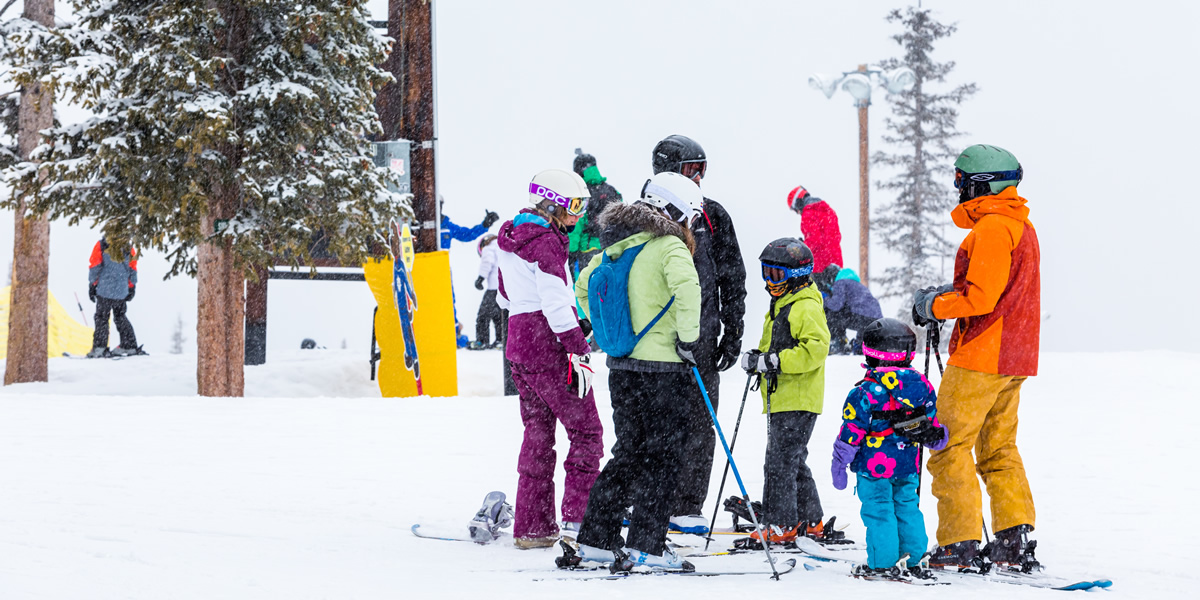
Vail can work extremely well for families because the resort offers terrain and instruction for different ability levels while the villages below provide activities for people who don’t want to ski all day.
Parents can take lessons with children, ski separately for part of the day and meet later for lunch or après-ski.
Non-skiing family members can enjoy Vail Village and Lionshead, explore shops and restaurants or simply experience the mountain atmosphere.
This flexibility makes Vail particularly useful for multi-generational trips where not everyone has the same interests or physical ability.
What to Wear for Skiing in Vail
The most important principle for dressing in Vail is layering.
Mountain weather can change quickly, and conditions at the base of the mountain can be very different from those higher up.
A proper ski jacket, insulating layers, waterproof pants, gloves, goggles and appropriate head protection are fundamental.
If you’re skiing the high alpine or Back Bowls, take weather conditions particularly seriously.
Wind and visibility can change rapidly, and exposed terrain can feel dramatically colder than sheltered areas.
You should also remember that Vail sits at high elevation.
Hydration and sun protection remain important even during winter.
Getting Around Vail During a Ski Vacation
One of the advantages of staying in Vail is that you don’t necessarily need a rental car for the entire vacation.
Vail Village and Lionshead are pedestrian-friendly, and the two areas are connected by a short walk and free local transportation.
This makes it possible to stay in the village, access the lifts and enjoy restaurants and shops without constantly getting into a vehicle.
For visitors staying farther away from the central villages, transportation becomes more important, particularly when carrying ski equipment.
That’s where private transportation can make the overall trip easier.
Getting From Denver International Airport to Vail for a Ski Trip
For many visitors, the journey to Vail begins at Denver International Airport.
The route from Denver into the mountains is scenic, but winter driving conditions can add another layer of complexity to a ski vacation. Snow, ice, traffic and mountain weather can make the journey considerably different from a normal highway drive.For travelers who prefer not to rent a car or drive immediately after a long flight, private transportation provides another option.
Great Divide Transportation offers private transportation from Denver International Airport to Vail, with luxury SUVs and executive vans available for individuals, families and groups traveling into the Vail Valley.
This can be particularly convenient when you’re carrying skis, snowboards and luggage.
You can arrange the airport transfer in advance, arrive in Vail and then rely on the local transportation network for much of the rest of your vacation.
Vail Transportation Services →
Transportation From Eagle County Regional Airport to Vail
Eagle County Regional Airport is another important gateway for visitors traveling to Vail.
Because the airport is located closer to the Vail Valley than Denver International Airport, it can provide a convenient arrival option when flights and schedules work for your trip.
Private transportation from Eagle County Regional Airport can take you directly to Vail Village, Lionshead, a hotel, private residence or other destination in the valley.
For groups traveling together, this can also simplify the arrival process because everyone can travel together rather than coordinating multiple rental cars.
A Better Way to Experience Vail Skiing
A successful ski trip to Vail isn’t about checking every trail off a list.
It’s about choosing terrain that matches your ability, understanding the mountain, watching the weather and giving yourself enough time to enjoy everything surrounding the skiing.
Spend a morning exploring groomed runs.
Take a lesson.
Head into the Back Bowls when conditions and ability allow.
Explore Blue Sky Basin.
Then return to Vail Village for dinner and après-ski.
The mountain is enormous, but your vacation doesn’t have to feel complicated.
With a little planning, you can make Vail’s size work in your favor.
Frequently Asked Questions About Skiing and Snowboarding in Vail
Is Vail good for beginner skiers?
Yes. Vail offers beginner terrain and professional ski and snowboard instruction. Beginners should choose terrain appropriate to their ability rather than attempting the more challenging Back Bowls or high-alpine areas before they are ready.
How big is Vail Ski Resort?
Vail Mountain has 5,317 acres of skiable terrain and seven Back Bowls.
What are Vail’s Back Bowls?
The Back Bowls are a collection of large open areas on the back side of Vail Mountain. They include Sun Up, Sun Down, Tea Cup, China, Siberia, Inner Mongolia and Outer Mongolia. Terrain difficulty varies considerably between the bowls.
Is Blue Sky Basin part of Vail Ski Resort?
Yes. Blue Sky Basin is part of Vail Mountain and provides a more remote, backcountry-like environment with open terrain and tree skiing.
Is Vail good for advanced skiers?
Yes. Advanced and expert skiers have access to bowls, glades, moguls, steep terrain, high-alpine skiing and challenging areas throughout the mountain.
Does Vail offer adaptive skiing?
Yes. Vail has an adaptive skiing program with specially trained instructors and equipment designed around individual needs.
Can you snowboard at Vail?
Yes. Vail Mountain offers terrain for snowboarders across the resort, including groomed runs, bowls, tree terrain and terrain parks.
Can you ski uphill at Vail?
Yes, but uphill access is subject to specific rules, schedules and designated routes. Vail states that uphill access is prohibited during normal daytime operations and requires visitors to check the current Uphill Access Trail Hotline before heading out.
What is the best way to get from Denver Airport to Vail?
Travelers can rent a car, use scheduled transportation or arrange a private airport transfer. For travelers who prefer private transportation, Great Divide Transportation provides transfers from Denver International Airport to Vail.
Experience Vail Mountain This Winter
Skiing and snowboarding in Vail are ultimately about more than the number of acres or the number of trails.
It’s about standing at the top of the mountain and deciding where you want to go next.
Maybe that means cruising a groomed run with your family. Maybe it’s your first trip into the Back Bowls. Maybe you’re an experienced skier looking for powder in Blue Sky Basin. Or perhaps you’re simply learning how to ski and discovering what makes a mountain vacation so addictive.
Vail has room for all of those experiences.
The mountain is enormous, but you don’t have to conquer it in one day. Explore it gradually, pay attention to conditions, choose terrain that matches your ability and leave enough time to enjoy the villages below.
Because the best Vail ski vacation isn’t necessarily the one where you ski the most terrain.
It’s the one where you finish the day already thinking about tomorrow’s run.